




-

"Very nice Posters. The quality is amazing and we received it very quickly !"
-

"A shop to visit absolutely. Huge selection of posters. We spent more than an hour there !"
-

"Perfect to find gift. Price are very good. An they can frame and pack it on site"
About the Artist
Martinus van Andringa was active at the end of the nineteenth century, a period when botanical illustration flourished as both a scientific and artistic discipline. His work reflects the era’s dedication to accuracy and beauty, serving the needs of botanists, gardeners, and educators alike. Van Andringa’s illustrations contributed to a growing appreciation of plant life, blending detailed observation with a refined aesthetic sensibility.
Today, his legacy endures among collectors and enthusiasts of botanical art prints, where his precise yet graceful depictions continue to inspire admiration for the natural world.
The Artwork
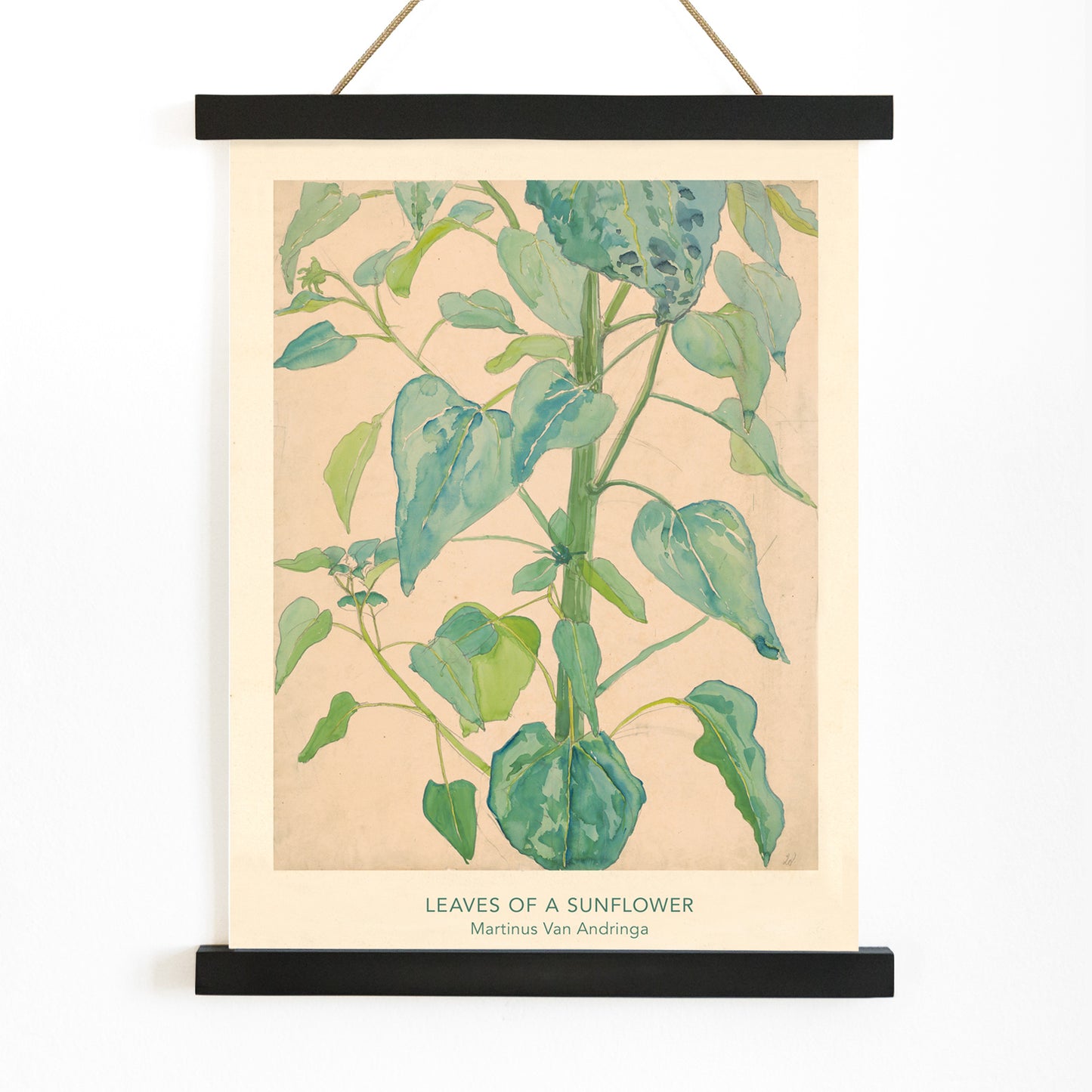
Created in 1899, this study of sunflower leaves highlights the often-overlooked structures that support the iconic flower. By focusing solely on the foliage, van Andringa invites viewers to consider the essential role leaves play in the plant’s vitality and growth. Such works were commonly produced for educational purposes, reflecting a time when botanical studies were integral to both science and culture.
This vintage print embodies the late nineteenth-century belief in the value of close observation, merging utility with a quiet sense of wonder. It stands as a testament to the era’s fascination with the natural world and the artistry found in scientific illustration.
Style & Characteristics
The composition features several sunflower leaves rendered in watercolor, set against a pale, unadorned background. The artist uses soft washes of green to suggest volume and texture, while fine, crisp lines define the veins and serrated edges of each leaf. The restrained color palette, dominated by greens and subtle beige, creates a calm and orderly mood.
This approach is characteristic of classic botanical plates, where clarity and detail are paramount. The print’s understated elegance makes it a natural fit for collections of scientific illustration prints and pairs well with other green-toned wall decor for a cohesive display.
In Interior Design
This botanical print introduces a subtle natural element to kitchens, studies, or bedrooms, offering organic shapes without overwhelming color. Its refined simplicity complements minimalist, Scandinavian, or modern rustic interiors, bringing a sense of calm and connection to nature.
Pair it with light wood accents, linen fabrics, or matte ceramics for a harmonious look, or incorporate it into a gallery wall with other vintage botanical pieces. A simple oak or brass frame enhances its timeless appeal and supports the artwork’s delicate character.