


You may also like
-

Alma delicada Póster
Wassily Kandinsky · 1925 · Lámina artística geométrica con líneas negras nítidas, toques amarillos y formas violetas suaves
Póster desde €9 · Enmarcado desde €16
-

Gewebe Póster
Wassily Kandinsky · 1923 · Lámina artística geométrica con bloques rítmicos y líneas sobre fondo beige cálido
Póster desde €9 · Enmarcado desde €16
-

Deutliche Verbindung Póster
Wassily Kandinsky · 1925 · Lámina artística geométrica que equilibra círculos y ángulos con acentos en colores primarios y violeta
Póster desde €9 · Enmarcado desde €16
-

Sans Titre Póster
Wassily Kandinsky · 1941 · Póster lírico abstracto con motivos geométricos flotantes en azul, amarillo, rosa y rojo
Póster desde €9 · Enmarcado desde €16


-

'Pósters preciosos. La calidad es increíble y llegaron rapidísimo.'
-

'Una tienda a la que hay que ir sí o sí. Tienen una selección enorme de pósters. ¡Nos pasamos allí más de una hora!'
-

'Perfecto si buscas un regalo. Los precios están muy bien. Y te lo pueden enmarcar y envolver allí mismo'
Sobre el artista
Wassily Kandinsky fue una figura pionera del arte abstracto, conocido por convertir ideas musicales en composiciones visuales. Para 1930, en su etapa influenciada por la Bauhaus, su enfoque se volvió más geométrico y estructurado, reflejando su profunda investigación sobre la teoría del color y el equilibrio compositivo. Su legado sigue inspirando a generaciones de artistas y coleccionistas, y sus obras suelen agruparse con otras láminas de Wassily Kandinsky y selecciones de artistas famosos para lograr una exhibición de arte moderno coherente
Kandinsky sostenía que la pintura podía provocar la misma resonancia emocional que la música, usando formas abstractas para expresar vivencias internas en lugar de representar el mundo exterior. Las obras de esta época, incluida Standing, ejemplifican su visión de un arte como lenguaje universal capaz de conmover los sentidos y la imaginación
La obra
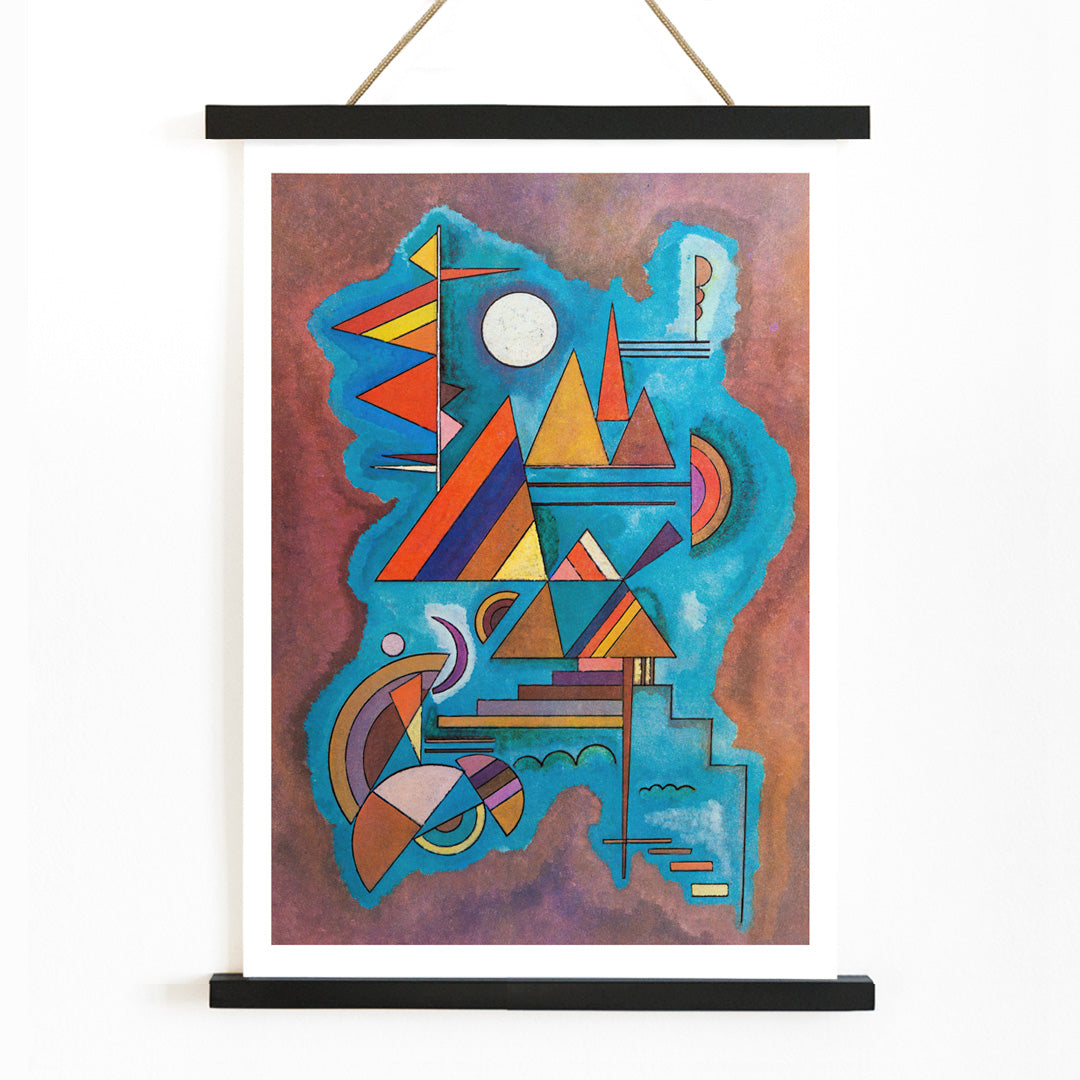
Standing, realizada en 1930, surge en un momento en que la vanguardia europea redefinía la abstracción como medio para transmitir balance y armonía. El título sugiere presencia o figura, pero la composición permanece no representacional, invitando al espectador a buscar significado en el arreglo de las formas. La intención de Kandinsky era crear una experiencia visual inmersiva, similar a escuchar una sinfonía, donde quien observa se conecta con el juego de ritmos y formas
Esta obra refleja el espíritu de la Bauhaus al integrar arte, diseño y teoría, y confirma el compromiso de Kandinsky con la innovación. Para quien se interesa por la relación entre arte y música, la colección de música amplía la exploración de este tema
Estilo y características
La composición presenta un fondo claro con líneas negras definidas, círculos flotantes y bloques geométricos en azul, rojo y amarillo vibrantes, salpicados con toques de naranja y marrón. El orden de los elementos sugiere movimiento y estabilidad a la vez, con ángulos agudos compensados por formas redondeadas. La paleta es brillante pero armónica, creando una energía controlada sobre la superficie
El conjunto transmite una sensación analítica y lúdica a la vez, combinando una ordenación casi arquitectónica con un gesto improvisado. Este póster abstracto encarna el modernismo geométrico y combina muy bien con otras obras abstractas o piezas inspiradas en la Bauhaus para lograr un interior visualmente dinámico
En la decoración interior
Este póster de Kandinsky introduce color y estructura en interiores contemporáneos, constituyendo un punto focal en salones, despachos o espacios creativos. Su formato vertical y ritmo visual permiten tanto anclar una galería de pared como destacar en solitario sobre un mueble, aportando sofisticación y energía
Para potenciar su efecto, coordínalo con textiles o complementos en azul, rojo o maderas cálidas. Enmarcado con sencillez, se convierte en una lámina vintage refinada que conecta el modernismo clásico con el estilo actual