


You may also like
-

Composición con gran plano rojo Póster
Pieter Cornelis Mondriaan · 1921 · Lámina artística abstracta geométrica con gran plano rojo y rejilla negra nítida
Póster desde €9 · Enmarcado desde €16
-

Composición con gran plano azul Póster
Pieter Cornelis Mondrian · 1921 · Lámina artística geométrica del De Stijl con un gran plano azul y líneas negras nítidas
Póster desde €9 · Enmarcado desde €16
-

Composición en blanco, rojo y amarillo Póster
Piet Mondrian · 1936 · Lámina artística geométrica que equilibra espacios blancos con líneas negras nítidas y bloques primarios
Póster desde €9 · Enmarcado desde €16
-

Place de la Concorde Póster
Piet Mondrian · 1941 · Póster abstracto geométrico que equilibra una cuadrícula negra con planos rojo amarillo y azul
Póster desde €9 · Enmarcado desde €16


-

'Pósters preciosos. La calidad es increíble y llegaron rapidísimo.'
-

'Una tienda a la que hay que ir sí o sí. Tienen una selección enorme de pósters. ¡Nos pasamos allí más de una hora!'
-

'Perfecto si buscas un regalo. Los precios están muy bien. Y te lo pueden enmarcar y envolver allí mismo'
Sobre el artista
Piet Mondrian fue un pionero neerlandés de la abstracción geométrica y figura central del movimiento De Stijl. Para 1920 ya había desarrollado su estilo neoplasticista característico, usando líneas rectas y colores primarios para buscar una armonía y un orden universales tras las convulsiones del siglo XX.
Las innovaciones de Mondrian supusieron un antes y un después en el arte moderno e influyeron a generaciones de artistas y diseñadores. Para quien explora artistas famosos, su obra sigue siendo un referente del lenguaje visual abstracto que inspira estéticas contemporáneas.
La obra
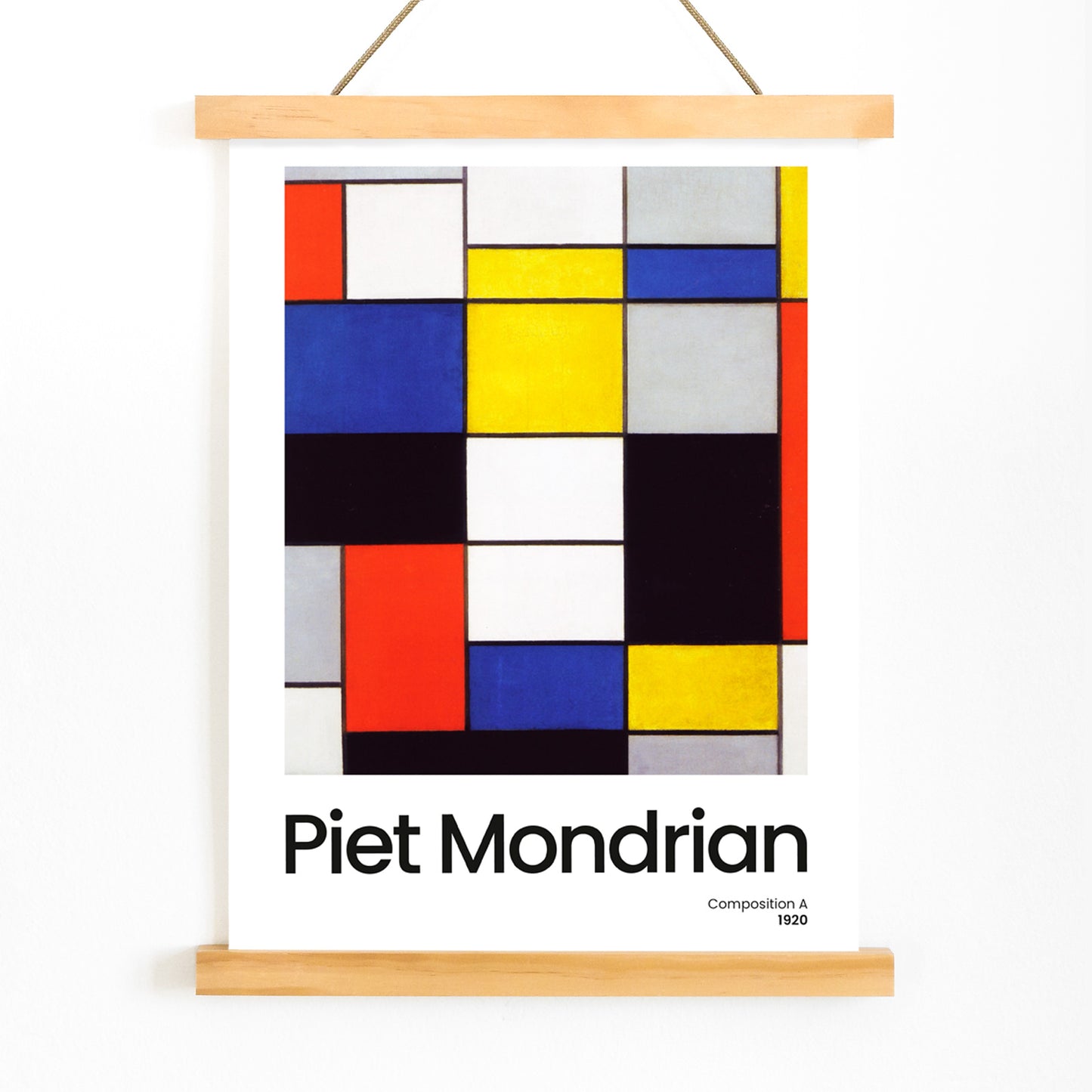
Creada en un periodo de transformación artística tras la Primera Guerra Mundial, Composition A refleja la voluntad de Mondrian de ir más allá de lo figurativo y construir una gramática visual basada en el equilibrio y la claridad. La pieza encarna los ideales de De Stijl, movimiento empeñado en reducir el arte a sus elementos esenciales para alcanzar una armonía universal.
En lugar de representar el mundo exterior, Mondrian buscó plasmar un orden racional capaz de resonar más allá de las fronteras culturales y temporales. La obra permanece como testimonio del optimismo de la época respecto a la abstracción como herramienta para reconstruir y reimaginar la sociedad.
Estilo y características
La composición presenta un fondo blanco estructurado por gruesas líneas negras verticales y horizontales que forman una rejilla irregular. Algunos rectángulos se rellenan con los vivos colores primarios —rojo, azul y amarillo— mientras otros quedan en blanco, generando una sensación de aire y ritmo.
Los bordes están nítidamente definidos y la asimetría deliberada crea tensión visual junto a un equilibrio dinámico. El tono general es sereno pero enérgico, convirtiendo esta obra en un ejemplo clásico de abstracción geométrica para quienes aprecian los pósters abstractos y el diseño modernista.
En la decoración interior
Esta lámina de Mondrian funciona especialmente bien en interiores que priorizan líneas limpias y minimalismo, como espacios escandinavos o de mid-century modern. Su composición estructurada combina con paletas neutras y materiales naturales, permitiendo que los colores primarios actúen como acentos potentes.
Puedes repetir uno de los tonos de la obra en textiles o accesorios, manteniendo de fondo blanco, negro o madera clara. La lámina también se integra con facilidad en decoraciones inspiradas en Bauhaus, ofreciendo un punto focal impactante sin saturar el ambiente.