


You may also like
-

Governor Wood Póster
Ellen Isham Schutt · 1911 · Realista lámina botánica de cereza con fruto rojo brillante y hojas verdes nítidas
Póster desde €9 · Enmarcado desde €16
-

Bael (Aegle marmelos) Póster
Ellen Isham Schutt · 1909 · Luminosa lámina de bael que combina precisión científica con cálidos tonos tropicales
Póster desde €9 · Enmarcado desde €16
-

Limones (Citrus limon) Póster
Ellen Isham Schutt · 1908 · Luminosa lámina botánica de limón con formas nítidas y follaje verde fresco
Póster desde €9 · Enmarcado desde €16
-

Plátanos Póster
Ellen Isham Schutt · 1904 · Lámina botánica de plátanos iluminada por el sol con suaves sombras y fondo diáfano
Póster desde €9 · Enmarcado desde €16


-

'Pósters preciosos. La calidad es increíble y llegaron rapidísimo.'
-

'Una tienda a la que hay que ir sí o sí. Tienen una selección enorme de pósters. ¡Nos pasamos allí más de una hora!'
-

'Perfecto si buscas un regalo. Los precios están muy bien. Y te lo pueden enmarcar y envolver allí mismo'
Sobre el artista
Ellen Isham Schutt fue una ilustradora botánica estadounidense conocida por sus precisos estudios en acuarela de frutas a comienzos del siglo XX. Su trabajo detallado aportó referencias visuales fundamentales para pomólogos, horticultores y educadores en una época de notable innovación agrícola.
El legado de Schutt perdura en la confluencia entre documentación científica y expresión artística, y sus ilustraciones siguen siendo piezas buscadas por coleccionistas de láminas de ilustración científica y aficionados al arte botánico vintage.
La obra
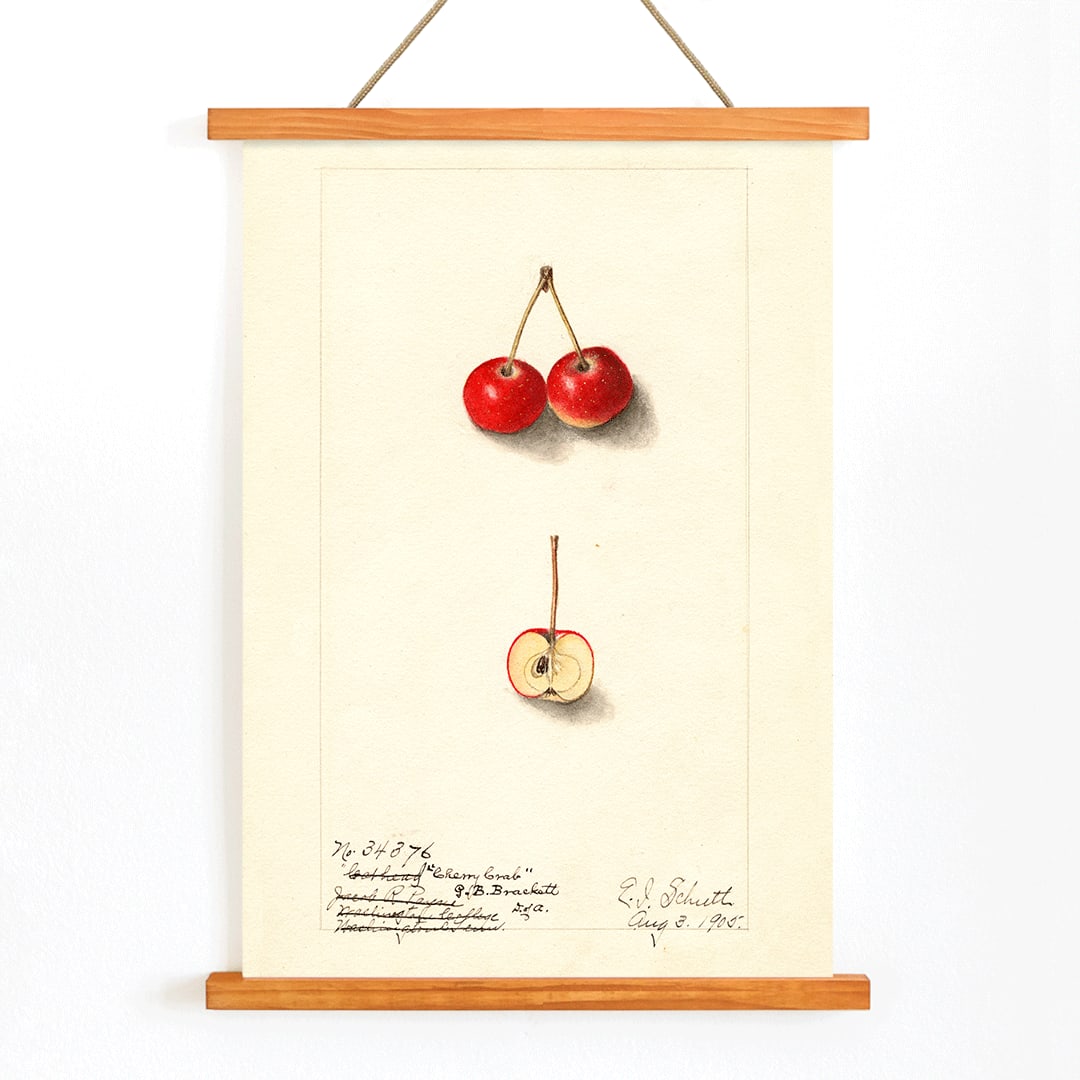
Cereza silvestre, datada en 1905, se realizó dentro del esfuerzo por catalogar y estandarizar variedades de fruta durante un periodo de expansión agrícola en Estados Unidos. Estas ilustraciones eran imprescindibles para identificar y comparar cultivares con precisión, apoyando tanto la gestión de huertos como el comercio de viveros en crecimiento.
Aunque concebida como una referencia, la obra refleja también la apreciación de la época por la belleza y la abundancia de la fruta cultivada, mezclando propósito científico con una sutil sensación de riqueza estacional. Es un testimonio del papel de la ilustración botánica en unir conocimiento y estética, al igual que otras piezas que se encuentran en colecciones de arte botánico.
Estilo y características
Esta lámina botánica muestra un par de manzanas silvestres pintadas con una acuarela luminosa, sobre un fondo blanco pulcro que realza su silueta. Los frutos presentan intensos matices rubí, acompañados de hojas verdes crujientes y delgados tallos marrones, todos ejecutados con escrupulosa atención al detalle natural.
La composición es ordenada y equilibrada, permitiendo que el motivo destaque con claridad. El ambiente general es sereno y fresco, característico de la ilustración botánica de archivo; las sutiles gradaciones cromáticas aportan vitalidad y realismo a la lámina.
En la decoración interior
Cereza silvestre añade un toque refinado a cocinas, comedores o rincones de desayuno, donde la iconografía frutal resulta acogedora y atemporal. En un despacho o estudio introduce un acento culto pero cercano, para quienes valoran la unión entre arte y ciencia en su decoración.
Combínala con marcos blancos o en madera clara y textiles neutros para lograr un aspecto aireado y contemporáneo. También se integra con naturalidad en una pared en estilo galería junto a otros pósters de cocina o láminas botánicas vintage para crear un conjunto coherente y natural