


You may also like
-

Acanthus mollis Póster
Karl Blossfeldt · 1928 · Escultural lámina de acanto en monocromo nítido y ambiente museístico
Póster desde €9 · Enmarcado desde €16
-

Flores Póster 2
Karl Blossfeldt · 1928 · Lámina escultórica de planta en blanco y negro con claridad modernista
Póster desde €9 · Enmarcado desde €16
-

Phacelia tanacetifolia Póster
Karl Blossfeldt · 1928 · Lámina artística escultórica de Phacelia con detalle monocromo nítido y curvas rítmicas
Póster desde €9 · Enmarcado desde €16
-

Cobea scandens Póster
Karl Blossfeldt · 1928 · Lámina escultórica de hiedra mexicana con tallos monocromos nítidos y zarcillos enrizados
Póster desde €9 · Enmarcado desde €16


-

'Pósters preciosos. La calidad es increíble y llegaron rapidísimo.'
-

'Una tienda a la que hay que ir sí o sí. Tienen una selección enorme de pósters. ¡Nos pasamos allí más de una hora!'
-

'Perfecto si buscas un regalo. Los precios están muy bien. Y te lo pueden enmarcar y envolver allí mismo'
Sobre el artista
Karl Blossfeldt fue un fotógrafo y pedagogo alemán cuyo trabajo pionero en retratos de plantas marcó la estética de la fotografía de principios del siglo XX. Radicado en Berlín, Blossfeldt construyó cámaras y accesorios a medida para captar con extrema nitidez las formas de tallos, botones y hojas, con el propósito de mostrar a estudiantes y artistas las estructuras subyacentes de la naturaleza.
Su obra se asocia estrechamente con la corriente de la Nueva Objetividad, que priorizaba la claridad y la precisión frente al sentimentalismo. El legado de Blossfeldt perdura entre diseñadores y coleccionistas de fotografía vintage gracias a su capacidad para convertir motivos naturales en modelos visuales de proporción y ritmo. Para ver más trabajos fotográficos afines, explora nuestras láminas fotográficas y la selección curada.
La obra
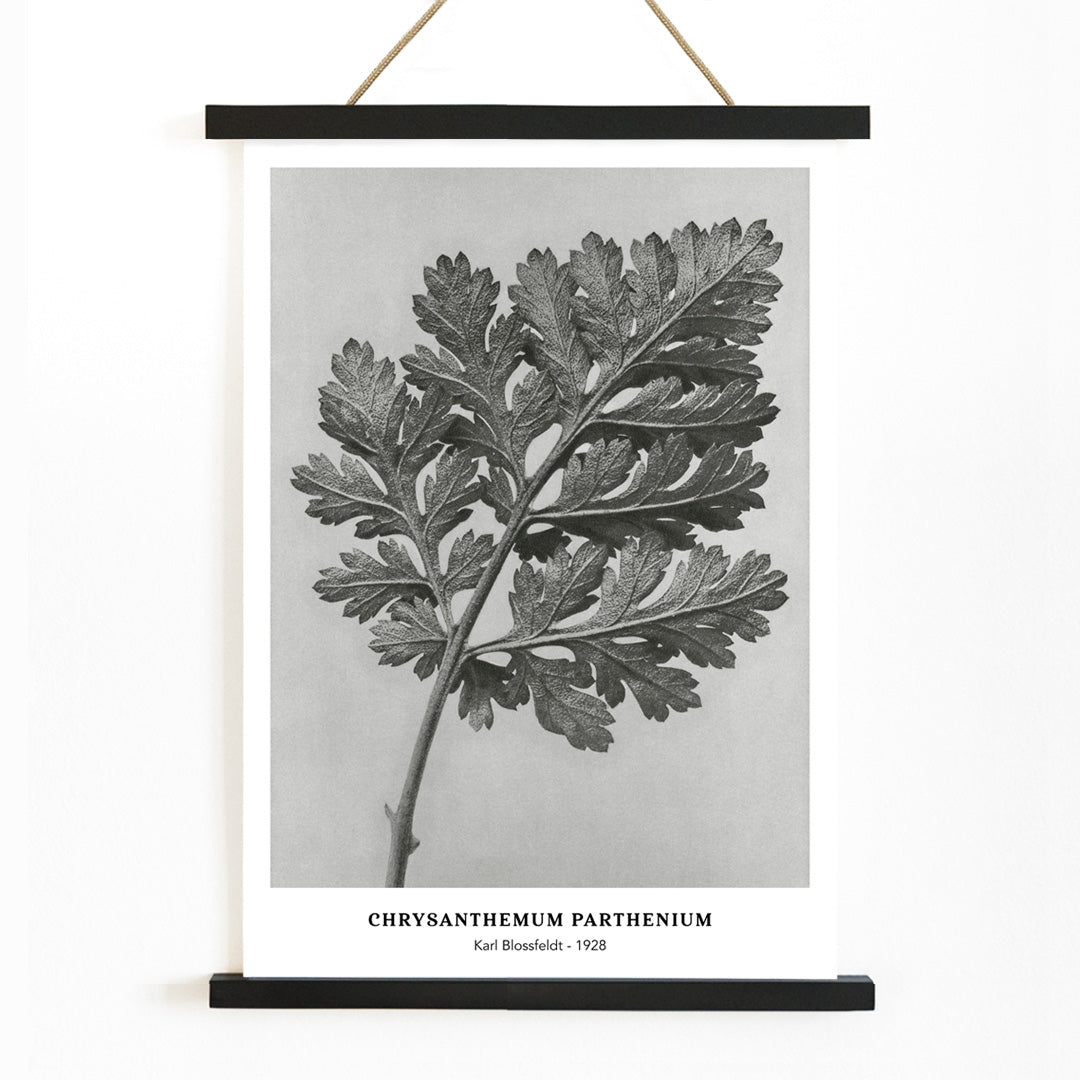
Creada en 1928, año en que Blossfeldt publicó su influyente portfolio Urformen der Kunst, este estudio del Chrysanthemum parthenium refleja una época en la que artistas y arquitectos buscaban en la naturaleza inspiración formal. La intención de Blossfeldt no era la mera decoración sino la enseñanza visual: ofrecer una referencia gráfica para comprender ritmos y proporciones naturales.
La fotografía surgió en un momento en que el diseño moderno dialogaba con motivos orgánicos, empleándolos como base para innovaciones desde la tipografía hasta la arquitectura. Como fotografía botánica vintage, abre una ventana a la fascinación de la época por la estructura y el crecimiento, mostrando cómo la observación científica puede confluir con la sensibilidad estética.
Estilo y características
La imagen presenta una única hoja de crisantemo aislada sobre un fondo pálido, poniendo en valor su silueta, la red de nerviación y los bordes serrados con una nitidez notable. La paleta contenida en blanco, negro y tonos de gris confiere a la composición una cualidad casi escultórica, donde las texturas parecen emerger en relieve.
La composición frontal y la iluminación uniforme eliminan distracciones y centran la atención en la forma esencial. El tono es contemplativo y moderno, lo que la convierte en una elección atractiva para quienes buscan arte mural en blanco y negro con resonancia tanto científica como artística. Descubre más en nuestra colección de pósters en blanco y negro.
En la decoración de interiores
Esta lámina artística funciona especialmente bien en ambientes minimalistas, dormitorios serenos u oficinas que buscan orden y calma. Sus tonos monocromos se integran con facilidad en paredes blancas, maderas claras, hormigón y metal, y pueden convertirse en el eje de una pared de galería sofisticada junto a obras tipográficas o abstractas.
Para interiores inspirados en la naturaleza, combina la pieza con cerámica, lino y plantas secas; resulta especialmente elegante en cocinas y comedores. Considera agruparla con otras piezas de arte botánico para crear una muestra vintage coherente