


You may also like
-
Acanthus mollis Póster
Karl Blossfeldt · 1928 · Escultural lámina de acanto en monocromo nítido y ambiente museístico
Póster desde €9 · Enmarcado desde €16
Precio habitual A partir de €6,00Precio habitual -
Phacelia tanacetifolia Póster
Karl Blossfeldt · 1928 · Lámina artística escultórica de Phacelia con detalle monocromo nítido y curvas rítmicas
Póster desde €9 · Enmarcado desde €16
Precio habitual A partir de €6,00Precio habitual -
Allium Ostrowskianum Póster
Karl Blossfeldt · 1928 · Lámina botánica modernista que revela la estructura del Allium en detallado blanco y negro
Póster desde €9 · Enmarcado desde €16
Precio habitual A partir de €6,00Precio habitual -
Flores Póster 1
Karl Blossfeldt · 1928 · Lámina escultórica de flor en blanco y negro con claridad de laboratorio
Póster desde €9 · Enmarcado desde €16
Precio habitual A partir de €6,00Precio habitual


-

"Very nice Posters. The quality is amazing and we received it very quickly !"
-

"A shop to visit absolutely. Huge selection of posters. We spent more than an hour there !"
-

"Perfect to find gift. Price are very good. An they can frame and pack it on site"
Sobre el artista
Karl Blossfeldt fue un fotógrafo y docente alemán célebre por sus primeros planos botánicos de gran nitidez. Trabajando en Berlín a principios del siglo XX, desarrolló una metodología fotográfica pensada como herramienta pedagógica, que invitaba a sus alumnos a observar las estructuras y ritmos subyacentes de la naturaleza. Su obra se asocia con la Nueva Objetividad, que privilegiaba la claridad y la directitud, y sigue influyendo en la fotografía y el diseño contemporáneos. Coleccionistas de láminas de fotografía artística valoran sus imágenes por su mezcla de precisión científica y visión estética.
Las fotografías botánicas de Blossfeldt jugaron un papel decisivo al reformular la percepción moderna de la forma natural, conectando los ámbitos del arte, la ciencia y el diseño. Su legado perdura porque sus imágenes siguen resonando entre quienes buscan la intersección entre naturaleza y creatividad.
La obra
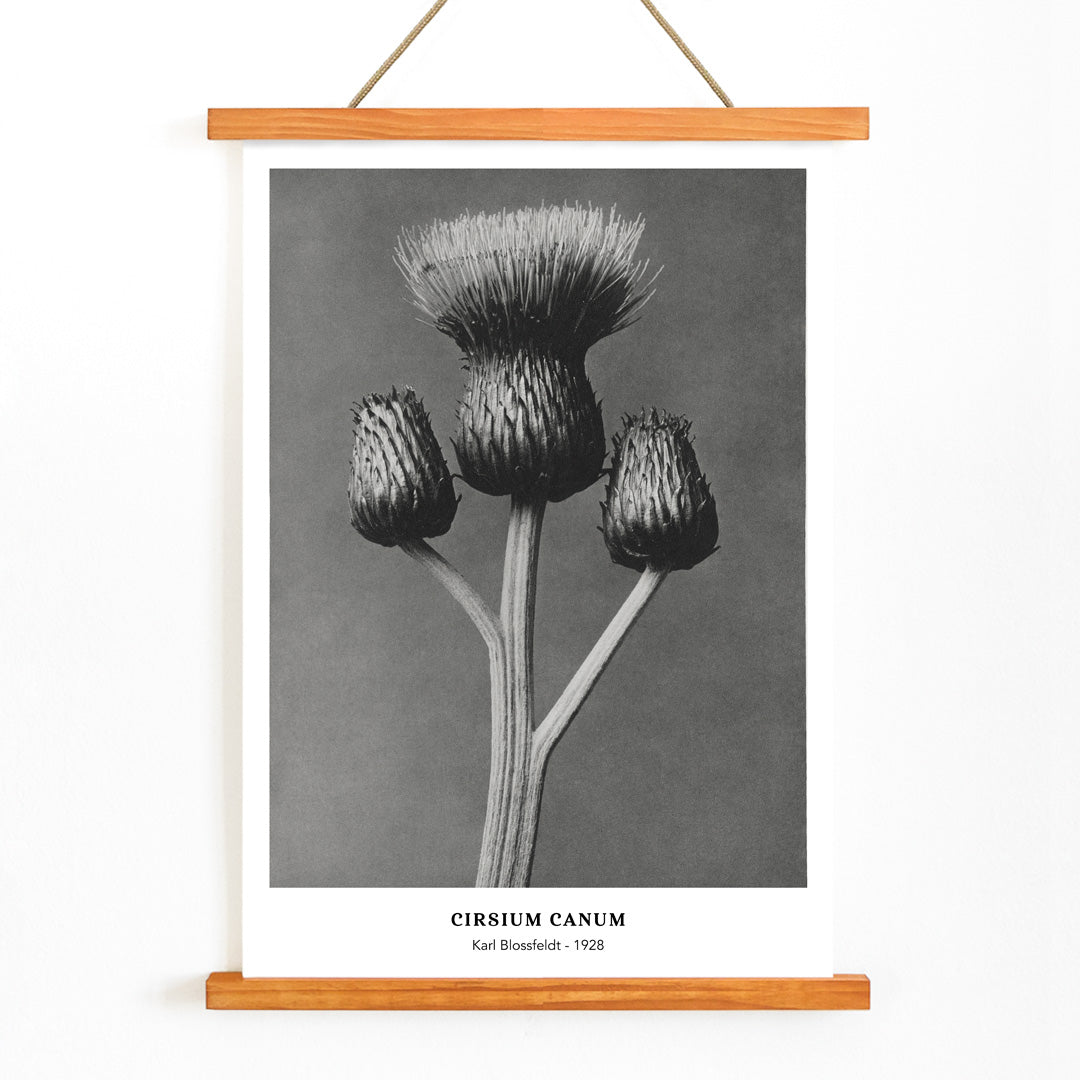
Esta imagen de Cirsium canum, o cardo gris, forma parte del proyecto innovador de 1928 que redefinió la fotografía botánica. Realizada en una época en que artistas y diseñadores europeos replanteaban el ornamento y la presencia de la naturaleza en la vida moderna, la fotografía eleva una planta humilde hasta convertirla en un modelo de arquitectura orgánica. La intención de Blossfeldt no era sólo documentar, sino desvelar cómo las formas naturales encarnan principios de repetición, variación y belleza funcional, en consonancia con el espíritu del Bauhaus de unir arte y artesanía.
Como reproducción vintage, la obra refleja el papel educativo e inspirador de la iconografía botánica en museos y escuelas de diseño. Sigue atrayendo a quienes aprecian el modernismo de la era Bauhaus y a quienes valoran la naturaleza reinterpretada desde una mirada de diseño y estructura.
Estilo y características
La fotografía se presenta en una paleta depurada de blanco, negro y grises que centra la atención en las formas intrincadas del cardo. El uso de un enfoque extremadamente nítido y de alto contraste realza las cualidades escultóricas de la planta, subrayando texturas y patrones repetitivos que casi parecen arquitectura. La composición deja amplios espacios negativos, lo que dota la imagen de calma y contemplación.
El conjunto transmite una atmósfera serena y analítica, lo que la convierte en una lámina botánica en blanco y negro que resulta a la vez vintage y moderna. Su elegancia contenida permite que complemente múltiples estilos de interior sin imponer presencia.
En la decoración interior
La lámina de Karl Blossfeldt encaja especialmente en interiores minimalistas, nórdicos y contemporáneos donde una imagen singular y concentrada actúa como anclaje visual. Funciona muy bien en salones, dormitorios o despachos, sobre todo con marcos en negro mate o madera natural y materiales táctiles como el lino o la piedra.
Para un conjunto armónico, combínela con grises suaves, blancos cálidos y acentos en carbón, o preséntela junto a otras obras en blanco y negro. Su atractivo alcanza a amantes del diseño, aficionados a la botánica y quienes buscan una estética fotográfica vintage de permanente elegancia.