


You may also like
-
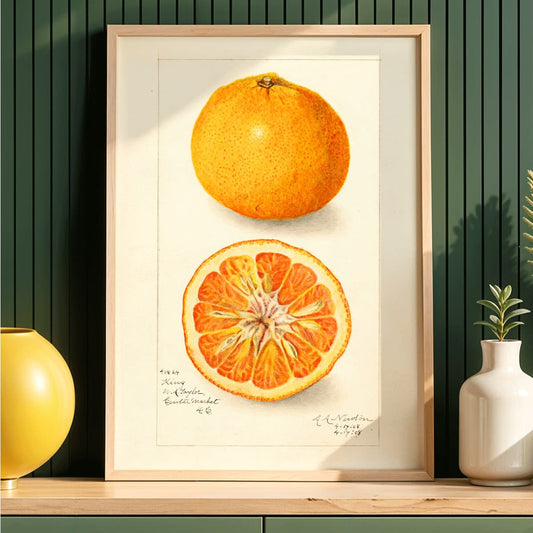
Citrus nobilis Póster
Amanda Almira Newton · 1908 · Detallada lámina botánica de mandarina con espacio negativo limpio y tonos naranjas cálidos
Póster desde €9 · Enmarcado desde €16
Precio habitual A partir de €6,00Precio habitual -
Aguacate (Persea) Póster
Amanda Almira Newton · 1916 · Detallada lámina botánica de aguacate con mitades maduras y hojas verdes brillantes
Póster desde €9 · Enmarcado desde €16
Precio habitual A partir de €6,00Precio habitual -
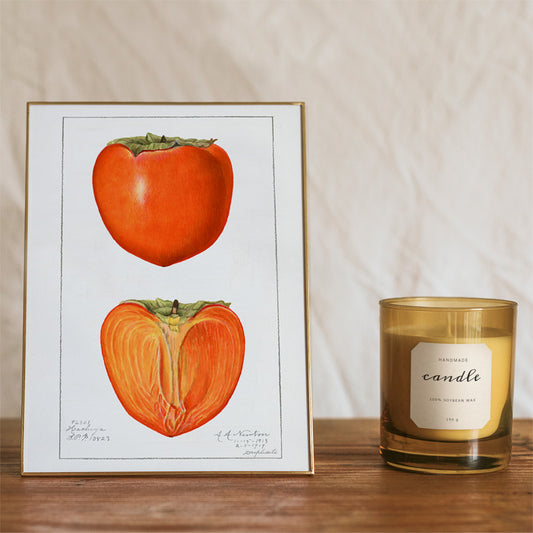
Caquis Póster
Amanda Almira Newton · 1923 · Delicada lámina botánica de caquis maduros en rama con hojas sobre fondo blanco limpio
Póster desde €9 · Enmarcado desde €16
Precio habitual A partir de €6,00Precio habitual -
Citrus sinensis Póster
Amanda Almira Newton · 1916 · Luminosa lámina botánica de naranja con fruto, hojas, flores y corte limpio
Póster desde €9 · Enmarcado desde €16
Precio habitual A partir de €6,00Precio habitual



-

'Pósters preciosos. La calidad es increíble y llegaron rapidísimo.'
-

'Una tienda a la que hay que ir sí o sí. Tienen una selección enorme de pósters. ¡Nos pasamos allí más de una hora!'
-

'Perfecto si buscas un regalo. Los precios están muy bien. Y te lo pueden enmarcar y envolver allí mismo'
Sobre el artista
Amanda Almira Newton fue una ilustradora botánica estadounidense conocida por sus meticulosas acuarelas de frutas y plantas con floración a principios del siglo XX. Su trabajo, inscrito en la tradición de la ilustración científica, proporcionó documentación esencial para fines agrícolas y educativos. Las ilustraciones de Newton son apreciadas por su equilibrio entre exactitud y sensibilidad artística, lo que las convierte en favoritas entre coleccionistas y aficionados al arte botánico vintage. Descubre más en nuestra colección Amanda Almira Newton.
Su carrera coincidió con una época en que la ilustración botánica tenía un papel crucial en el catálogo de variedades vegetales para cultivadores e investigadores, sirviendo de puente entre el trabajo de campo y el registro científico.
La obra
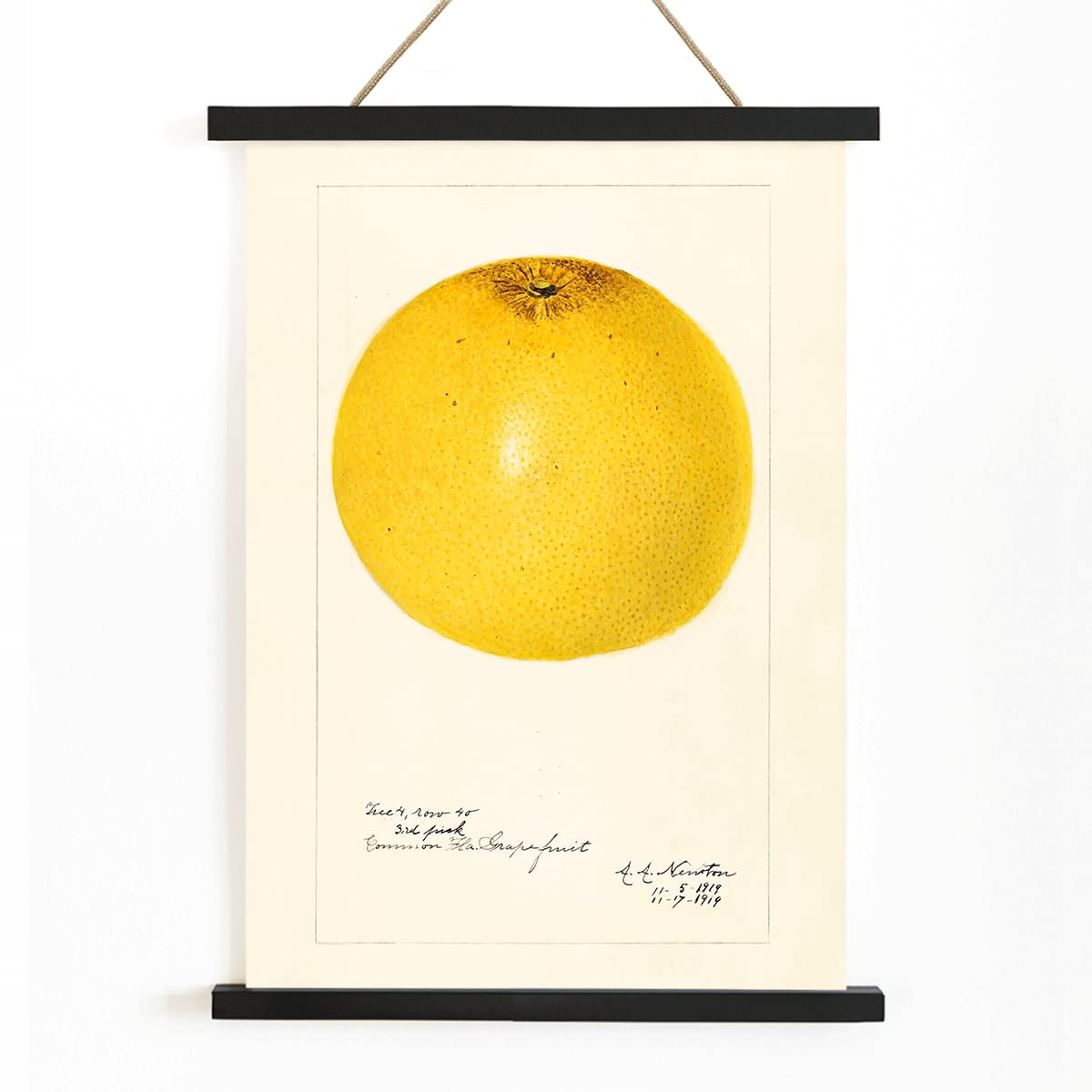
Esta plancha de 1919, Citrus paradisi, se produjo en un periodo de expansión de la citricultura en Estados Unidos. A medida que el cultivo del pomelo ganaba relevancia, las ilustraciones detalladas como esta resultaban fundamentales para la identificación y clasificación precisas. La obra de Newton apoyó el desarrollo agrícola al ofrecer referencias visuales fiables para cultivadores y científicos, reflejando el movimiento más amplio de documentación y estandarización de variedades frutales a comienzos del siglo XX.
Más allá de su función científica, la imagen evoca con sutileza temas de frescura y vitalidad, conectando al observador con el optimismo del progreso agrícola de la época.
Estilo y características
El estilo de Newton se distingue por la observación precisa y una técnica controlada en acuarela. El pomelo aparece aislado sobre un fondo pálido, lo que permite que su forma y color destaquen con claridad. Gradientes suaves de amarillo y discretos toques verdes reproducen la textura natural del fruto, mientras sombras delicadas aportan volumen. El efecto general resulta sereno y centrado, invitando a una mirada atenta.
Esta paleta suave armoniza con otras láminas botánicas y complementa interiores que privilegian materiales naturales y una elegancia contenida.
En la decoración interior
Esta lámina cítrica vintage aporta un encanto discreto a cocinas, zonas de desayuno o comedores, donde la imaginería frutal resulta a la vez pertinente y atemporal. Sus tonos amarillos combinan bien con maderas claras, lino y cerámica, encajando con naturalidad en ambientes modernos, de inspiración escandinava o clásicos. Para una composición armónica, considera integrarla con piezas de nuestra colección de arte mural de cocina.
La presencia sosegada de la obra también funciona en pasillos y despachos domésticos, añadiendo calidez e interés botánico sin saturar el espacio.