


You may also like
-

Plátanos Póster
Ellen Isham Schutt · 1904 · Lámina botánica de plátanos iluminada por el sol con suaves sombras y fondo diáfano
Póster desde €9 · Enmarcado desde €16
-

Bael (Aegle marmelos) Póster
Ellen Isham Schutt · 1909 · Luminosa lámina de bael que combina precisión científica con cálidos tonos tropicales
Póster desde €9 · Enmarcado desde €16
-

Cereza silvestre Póster
Ellen Isham Schutt · 1905 · Delicada lámina artística de manzano silvestre con frutos rubí y hojas nítidas sobre fondo blanco
Póster desde €9 · Enmarcado desde €16
-

Governor Wood Póster
Ellen Isham Schutt · 1911 · Realista lámina botánica de cereza con fruto rojo brillante y hojas verdes nítidas
Póster desde €9 · Enmarcado desde €16


-

'Pósters preciosos. La calidad es increíble y llegaron rapidísimo.'
-

'Una tienda a la que hay que ir sí o sí. Tienen una selección enorme de pósters. ¡Nos pasamos allí más de una hora!'
-

'Perfecto si buscas un regalo. Los precios están muy bien. Y te lo pueden enmarcar y envolver allí mismo'
Sobre el artista
Ellen Isham Schutt fue una ilustradora botánica estadounidense cuyas minuciosas láminas de frutas pasaron a formar parte fundamental de los archivos visuales del USDA a comienzos del siglo XX. Trabajando en la intersección entre arte y agricultura, transformó variedades cultivadas en imágenes de referencia claras y fiables que podían ser compartidas entre agricultores, investigadores y docentes. Sus planchas se valoran tanto por su exactitud científica como por un encanto discreto y sobrio.
Su obra se aprecia a menudo junto a otras láminas de arte científico, donde la observación rigurosa y el atractivo estético tienen el mismo peso.
La obra
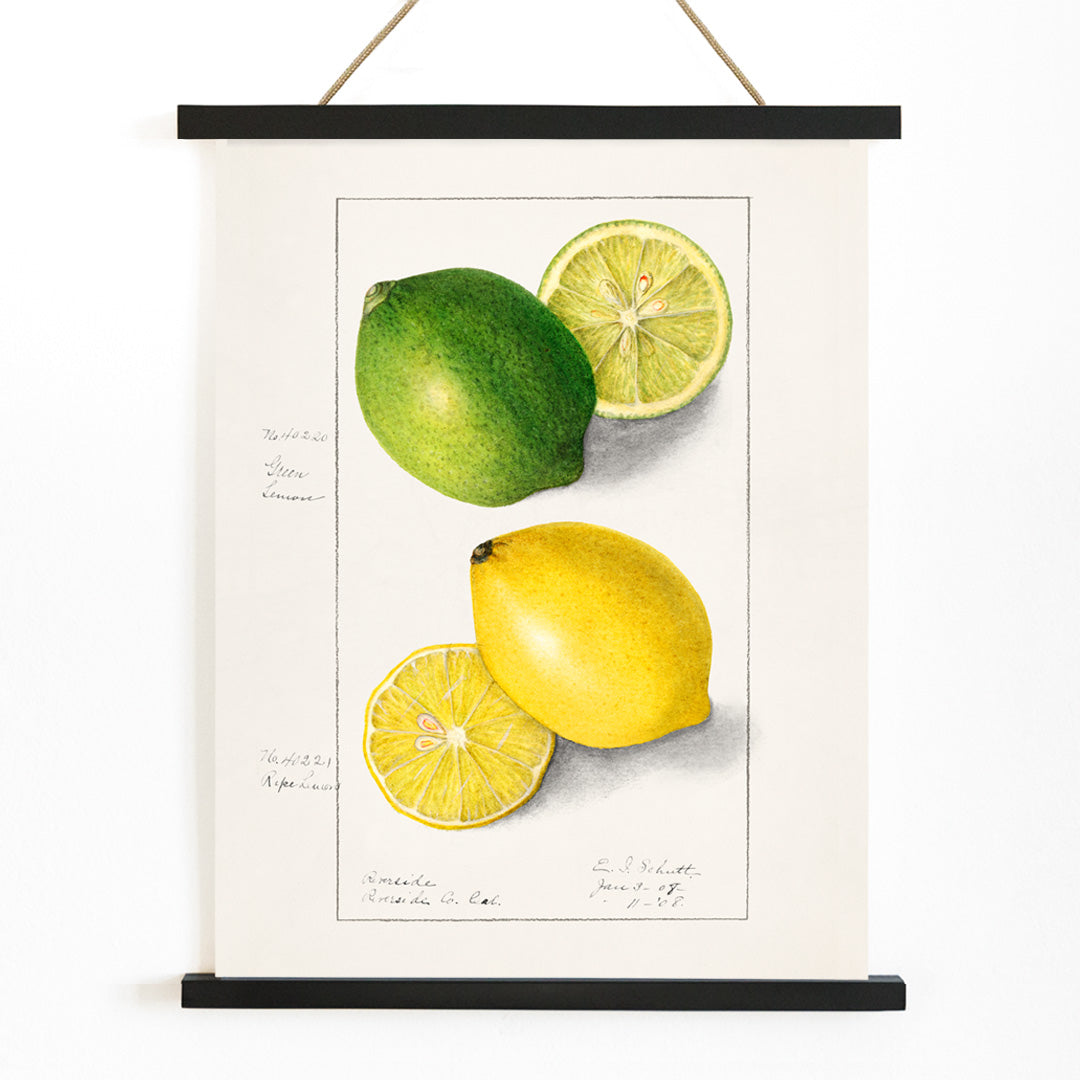
Este estudio de 1908 del Citrus limon se realizó en una época en la que la agricultura estadounidense dependía de la ilustración precisa para documentar variedades de cultivo, estandarizar nomenclaturas y comunicar la calidad entre regiones. Imágenes como esta eran esenciales para la identificación y comparación, ayudando a instituciones y productores a describir rasgos de la fruta antes de que la fotografía en color fuera práctica para referencias impresas.
Más allá de su función documental, el limón simbolizaba frescura y abundancia, enlazando el registro científico con la vida cotidiana y el disfrute culinario. La lámina refleja un momento en que la ilustración botánica servía de puente entre la ciencia y la cultura doméstica, ofreciendo simultáneamente información técnica y una presencia decorativa amable.
Estilo y características
La composición muestra limones representados con claridad de espécimen, sobre un fondo amplio y neutro que realza cada detalle. El sombreado sutil aporta volumen a los frutos, mientras las hojas verdes que los acompañan introducen un ritmo natural y una sensación de vitalidad.
La paleta se articula en torno a amarillos brillantes y verdes frescos, generando una atmósfera acogedora y optimista. El efecto general es sereno y preciso, atractivo para coleccionistas de láminas botánicas que valoran tanto la belleza decorativa como la integridad científica.
En la decoración de interiores
Esta lámina vintage encaja especialmente bien en cocinas, desayunadores y comedores, donde aporta una sensación de frescura y luminosidad. Su presentación despejada se integra con facilidad en estilos como farmhouse moderno, escandinavo o clásicos renovados.
Combínala con blancos cálidos, maderas claras o piezas cerámicas, o resalta sus tonos con objetos de las colecciones amarillo y verde. Tanto enmarcada como punto focal único, como agrupada con otras obras botánicas, seduce a cocineros, jardineros y amantes del arte botánico vintage.