


You may also like
-

Acanthus mollis Póster
Karl Blossfeldt · 1928 · Escultural lámina de acanto en monocromo nítido y ambiente museístico
Póster desde €9 · Enmarcado desde €16
-

Flores Póster 1
Karl Blossfeldt · 1928 · Lámina escultórica de flor en blanco y negro con claridad de laboratorio
Póster desde €9 · Enmarcado desde €16
-

Flores Póster 2
Karl Blossfeldt · 1928 · Lámina escultórica de planta en blanco y negro con claridad modernista
Póster desde €9 · Enmarcado desde €16
-

Asclepias Syriaca Póster
Karl Blossfeldt · 1928 · Escultórica lámina en blanco y negro del algodoncillo que resalta yemas geométricas sobre fondo de estudio limpio
Póster desde €9 · Enmarcado desde €16


-

'Pósters preciosos. La calidad es increíble y llegaron rapidísimo.'
-

'Una tienda a la que hay que ir sí o sí. Tienen una selección enorme de pósters. ¡Nos pasamos allí más de una hora!'
-

'Perfecto si buscas un regalo. Los precios están muy bien. Y te lo pueden enmarcar y envolver allí mismo'
Sobre el artista
Karl Blossfeldt fue un fotógrafo alemán célebre por sus retratos de plantas que marcaron la estética de la Nueva Objetividad en los años veinte. Trabajando en Berlín, Blossfeldt abordó los motivos botánicos con la mirada de un escultor, poniendo en valor las cualidades arquitectónicas de tallos, capullos y infrutescencias. Su visión innovadora invitó a mirar la naturaleza como una fuente de diseño, acercando ciencia y arte.
Las imágenes de Blossfeldt alcanzaron reconocimiento internacional gracias a su influyente libro de 1928 Urformen der Kunst, que fascinó a artistas, diseñadores y arquitectos de la época Bauhaus. Su obra sigue inspirando a quienes exploran la intersección entre formas naturales y cultura visual, situándolo como una figura clave en la historia de la arte mural fotográfico.
La obra
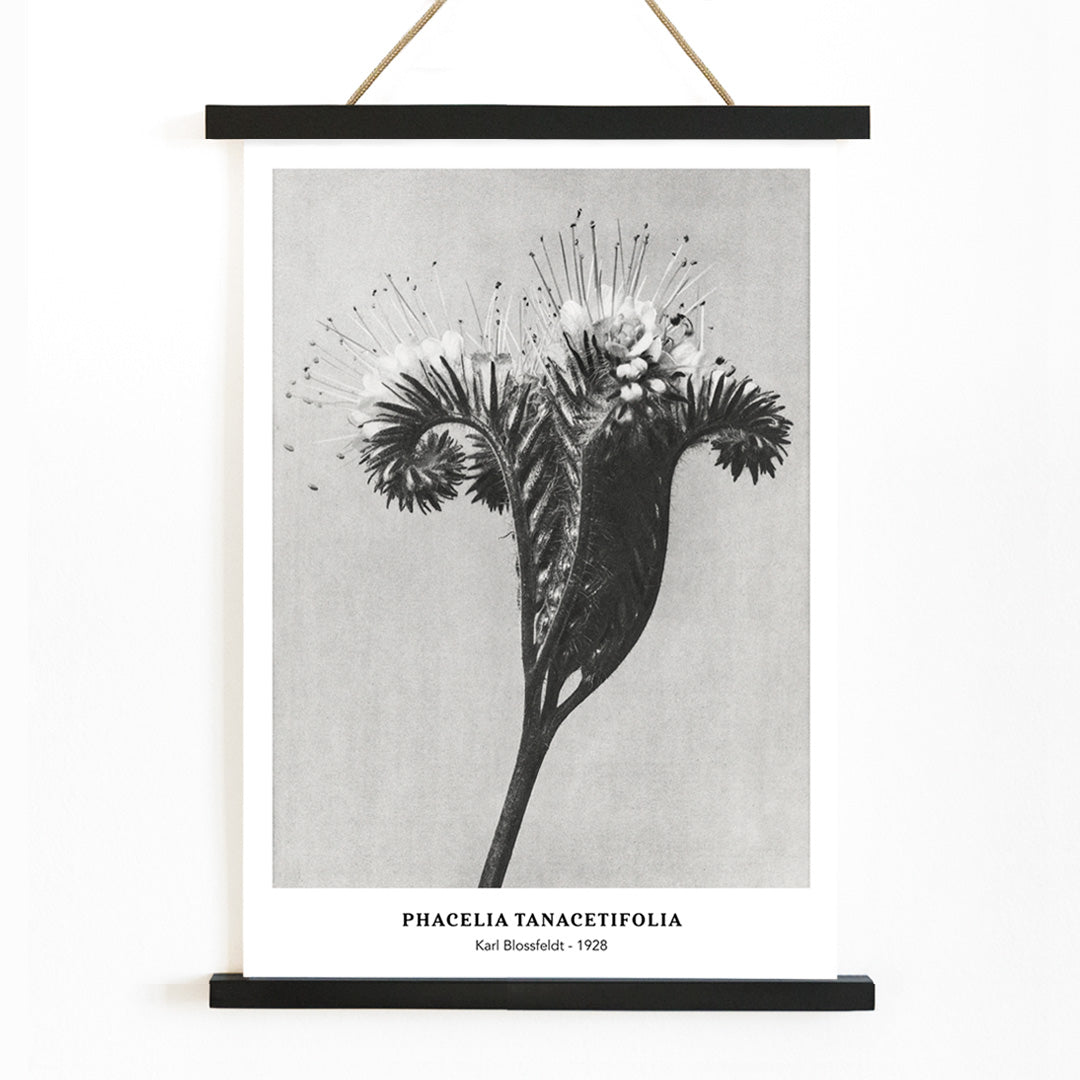
Esta fotografía de Phacelia tanacetifolia forma parte del proyecto más amplio de Blossfeldt destinado a revelar las estructuras y patrones subyacentes en la vida vegetal. Creada en un momento en que el diseño moderno buscaba nuevas fuentes de inspiración, la imagen invita a apreciar la lógica y la belleza del crecimiento natural. Lejos de presentar la planta como mero adorno, Blossfeldt propone un estudio atento de su forma y función.
En el contexto de finales de los años veinte, obras como esta resonaron entre artistas y arquitectos interesados en la abstracción, la repetición y la economía de medios. La fotografía ejemplifica cómo un enfoque casi científico de la observación puede producir resultados artísticos impresionantes, elevando a la familiar Phacelia a la vez que espécimen botánico y lección visual sobre estructura.
Estilo y características
La composición sitúa la Phacelia sobre un fondo liso y claro, lo que permite que sus contornos y texturas complejas resalten con total nitidez. La paleta monocroma abarca desde negros intensos hasta grises luminosos, conferiéndole a la planta una cualidad escultórica propia de la fotografía clásica en blanco y negro. Cada detalle aparece con una precisión extremadamente nítida, invitando a la inspección pausada.
La técnica de Blossfeldt transforma un motivo botánico modesto en una declaración de diseño contundente. La ampliación de escala y el enfoque preciso subrayan las curvas rítmicas y la simetría orgánica de la planta. Para los aficionados a la decoración mural en blanco y negro, esta lámina botánica minimalista aporta calma, orden y una sensación de profundidad táctil.
En la decoración de interiores
Esta lámina funciona como un punto focal refinado en salones, pasillos o despachos, especialmente cuando se busca un acento sereno y neutro. Su paleta discreta armoniza con materiales naturales como piedra, madera y lino, integrándose con fluidez en interiores escandinavos, modernistas o Japandi.
Para una composición de galería coherente, combínela con otros estudios de plantas o piezas tipográficas de nuestra colección botánica, con marcos delgados y mate para un efecto de calidad museística. La obra seduce a quienes valoran la curiosidad científica y la elegancia contenida en la decoración