


You may also like
-

Observatorio popular del Trocadéro Póster
Léon Jaubert · 1889 · Planisferio celeste detallado en póster con líneas de constelación nítidas sobre fondo azul profundo
Póster desde €9 · Enmarcado desde €16
-

Mapa celeste Póster
R. Barbot · 1874 · Póster celeste detallado con nombres de constelaciones francesas sobre fondo azul intenso
Póster desde €9 · Enmarcado desde €16
-

Estrellas del cielo austral Póster
Instituto de Leipzig · 1854 · Lámina del cielo austral con puntos estelares nítidos y finas líneas de constelaciones
Póster desde €9 · Enmarcado desde €16
-

Coelum Stellatum Hemisphaerium Arietis Póster
Johann Elert Bode · 1801 · Detallada lámina vintage celeste del hemisferio de Aries con figuras de constelaciones y cuadrícula estelar
Póster desde €9 · Enmarcado desde €16


-

'Pósters preciosos. La calidad es increíble y llegaron rapidísimo.'
-

'Una tienda a la que hay que ir sí o sí. Tienen una selección enorme de pósters. ¡Nos pasamos allí más de una hora!'
-

'Perfecto si buscas un regalo. Los precios están muy bien. Y te lo pueden enmarcar y envolver allí mismo'
Sobre el artista
Claude-Joseph Drioux fue un cartógrafo francés activo en el siglo XIX, conocido por sus mapas educativos que acercaron la geografía y la astronomía a un público amplio. Su obra refleja una época en la que los atlas impresos y las cartas estelares ayudaban a construir el conocimiento público sobre el mundo y el cosmos.
Las aportaciones de Drioux popularizaron la ciencia, convirtiendo temas complejos en recursos visuales claros y accesibles. Para más obra cartográfica, explora nuestra colección de mapas.
La obra
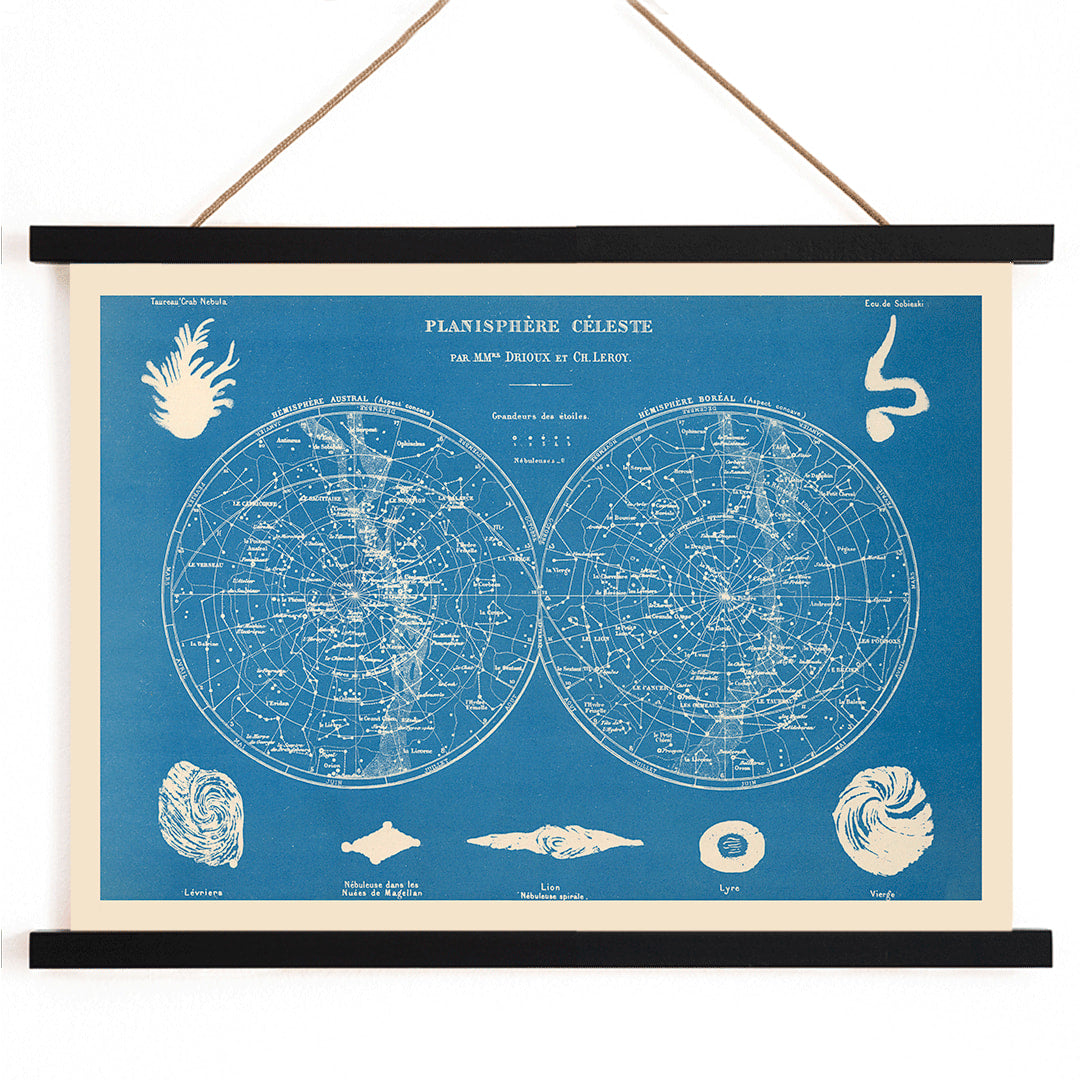
Esta Planisfera celeste de 1886 nació cuando la astronomía se incorporaba a la vida cotidiana a través de conferencias públicas y materiales ilustrados. Las planisferas servían como herramientas prácticas para aprender el cielo nocturno, transformando la inmensidad estelar en un sistema legible y ordenado.
Más allá de su función didáctica, la pieza refleja la fascinación de la época por el descubrimiento y el deseo de vincular la observación personal con el espíritu científico vigente. Encapsula el entusiasmo de finales del siglo XIX por cartografiar y comprender el universo, convirtiéndola en un testimonio valioso para quienes aprecian la historia y la ciencia.
Estilo y características
El mapa está concebido como una planisfera, con dos cartas circulares principales que representan los hemisferios norte y sur. Alrededor de las cartas se disponen anotaciones y etiquetas detalladas que invitan a un examen detenido. El trazo es fino y preciso, delimitando constelaciones y coordenadas celestes en equilibrio entre lo decorativo y lo científico.
La obra emplea una paleta contenida de azul y blanco, evocando la tinta tradicional sobre papel y creando un ambiente sereno y contemplativo. Su aspecto académico y elegante lo convierte en una lámina celeste sofisticada para una pared de galería; descubre más piezas del cielo en nuestra colección espacial.
En la decoración interior
Esta lámina de astronomía vintage encaja en un despacho, biblioteca o salón donde se busque una pieza de conversación refinada. Su estructura geométrica complementa interiores minimalistas y clásicos, especialmente junto a madera, latón o textiles oscuros.
Para lograr armonía, combina con tonos marinos, blanco suave y gris, o contrástalo con roble cálido y cuero tostado. Enmarcada como impresión artística aporta profundidad a rincones de estudio o a galerías de pasillo; consulta nuestras molduras para completar la presentación.