


You may also like
-

Tipos de peces Póster
Charles Dessalines D'Orbigny · 1841 · Lámina de historia natural con líneas nítidas y sutiles colores a mano
Póster desde €9 · Enmarcado desde €16
-

Peces Póster
Claude Augé · 1908 · Lámina científica de peces detallada dispuesta como tabla educativa sobre fondo blanco
Póster desde €9 · Enmarcado desde €16
-

Salmonete y algas Póster
Maurice Pillard Verneuil · 1897 · Póster Art Nouveau de salmonete entre algas estilizadas en tonos verdes y naranjas
Póster desde €9 · Enmarcado desde €16
-

Peces coloridos y surrealistas 7 Póster
Louis Renard · 1754 · Lámina surrealista de peces tropicales con franjas audaces y aletas fantásticas sobre fondo blanco
Póster desde €9 · Enmarcado desde €16


-

'Pósters preciosos. La calidad es increíble y llegaron rapidísimo.'
-

'Una tienda a la que hay que ir sí o sí. Tienen una selección enorme de pósters. ¡Nos pasamos allí más de una hora!'
-

'Perfecto si buscas un regalo. Los precios están muy bien. Y te lo pueden enmarcar y envolver allí mismo'
Sobre el artista
Samuel Kilbourne fue un ilustrador del siglo XIX reconocido por sus representaciones minuciosas de peces y vida marina. En una época en la que la ilustración científica era clave para catalogar el mundo natural, la obra de Kilbourne sirvió de puente entre el arte y la ciencia, ofreciendo tanto disfrute estético como valor educativo. Sus láminas se convirtieron en referencias importantes para naturalistas y coleccionistas, reflejando la fascinación de la época por la taxonomía y la diversidad de la naturaleza.
Su legado perdura en la apreciación continua de sus impresiones, valoradas por su claridad, exactitud y elegancia sobria.
La obra
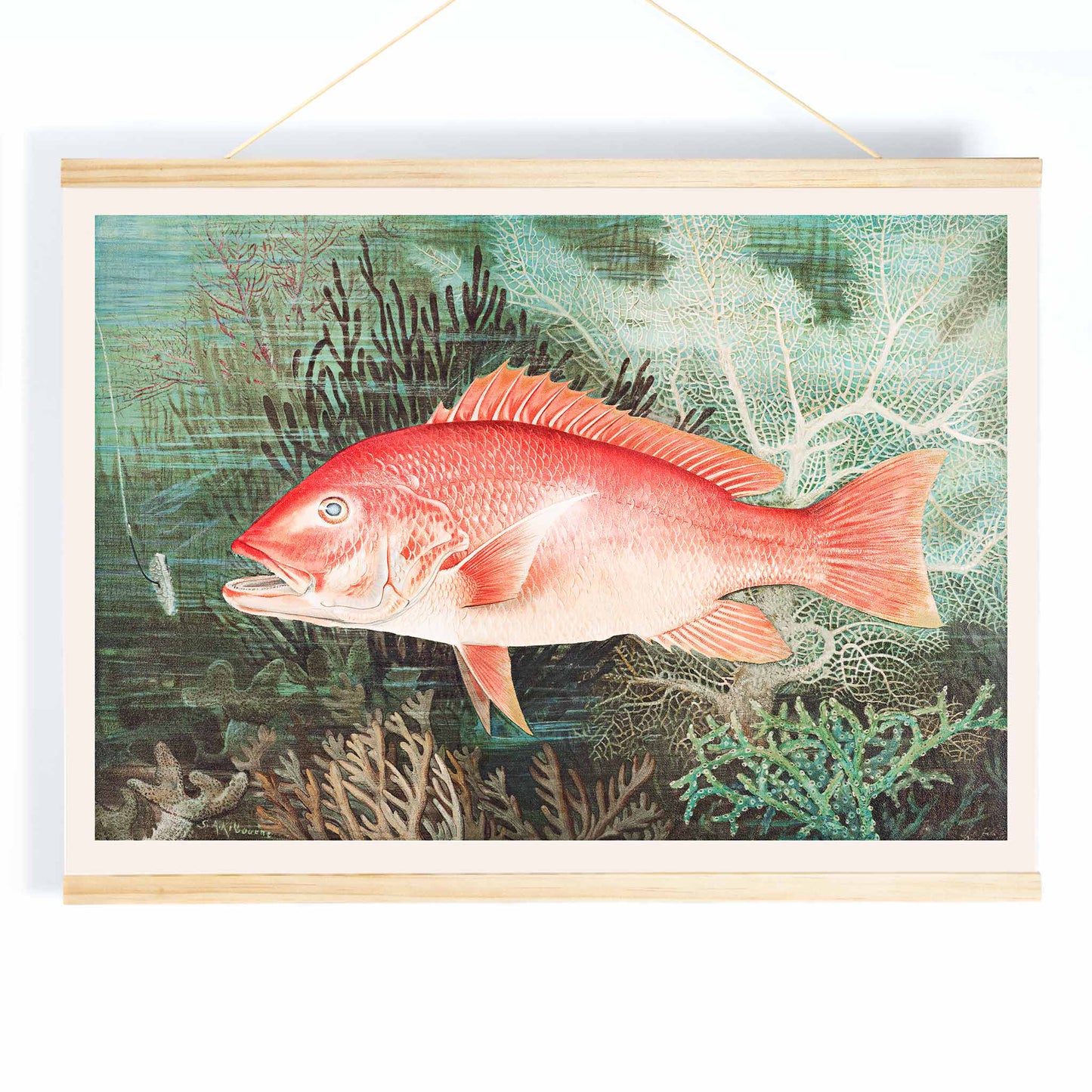
Esta plancha de 1861 del pargo rojo del norte se produjo en un periodo en que la documentación de especies era esencial para el estudio científico y el interés público. La pieza fue concebida como herramienta de identificación, acompañando el creciente interés por la biología marina y la importancia económica de las pesquerías costeras. Al aislar el pez sobre un fondo neutro, Kilbourne subraya sus rasgos distintivos, convirtiendo la lámina en un recurso valioso tanto para el estudio como para la contemplación.
Hoy en día, la obra sigue conectando con quienes aprecian la decoración de mar y océano y con coleccionistas que valoran la confluencia entre historia natural y arte. También forma parte de la tradición de láminas de arte animal que celebran la riqueza del reino animal.
Estilo y características
La lámina muestra un único pargo rojo del norte de perfil, detallado con precisión para resaltar su anatomía. El artista emplea trazos finos y sombreado sutil para representar escamas, aletas y rasgos faciales con gran claridad. La paleta se centra en rojos intensos y rosas, con verdes apagados en las aletas y un fondo beige suave que dota a la escena de un aire armonioso y naturalista.
El efecto general es sereno y contemplativo; el pez adquiere una presencia casi escultórica sobre el fondo neutro. Esta presentación sobria y de tipo espécimen es propia de las láminas clásicas de historia natural del siglo XIX, donde la precisión científica convive con una belleza contenida.
En la decoración de interiores
Esta lámina vintage de historia natural aporta un aire refinado y académico a cocinas, comedores o despachos. Su paleta discreta combina bien con paredes neutras y maderas naturales, mientras que el detalle cuidado añade interés visual sin sobrecargar el ambiente.
Funciona especialmente bien en paredales junto a otras piezas marinas o láminas animales, creando una composición coherente y cultivada que rinde homenaje a la tradición de la ilustración científica.