


You may also like
-
Sevilla Fiestas de Primavera Póster
Artista desconocido · 1932 · Vibrante póster de las fiestas de Sevilla con bailaora sobre un horizonte urbano estilizado
Póster desde €9 · Enmarcado desde €16
Precio habitual A partir de €6,00Precio habitual -
Cigarrillos París Póster
Aleardo Villa · 1901 · Elegante póster de la Belle Époque con mujer recostada entre flores rosas y moradas
Póster desde €9 · Enmarcado desde €16
Precio habitual A partir de €6,00Precio habitual -
Automobile Club de France Póster
Georges Antoine Rochegrosse · 1901 · Elegante póster Art Nouveau con musa alegórica, flores y engranajes automotrices
Póster desde €9 · Enmarcado desde €16
Precio habitual A partir de €6,00Precio habitual -
Capital del Mediterráneo Póster
Artista desconocido · 1992 · Lámina de viaje gráfica de Barcelona con paisaje urbano estilizado y atrevidos acentos azules y rojos
Póster desde €9 · Enmarcado desde €16
Precio habitual A partir de €6,00Precio habitual


-

"Very nice Posters. The quality is amazing and we received it very quickly !"
-

"A shop to visit absolutely. Huge selection of posters. We spent more than an hour there !"
-

"Perfect to find gift. Price are very good. An they can frame and pack it on site"
Sobre el artista
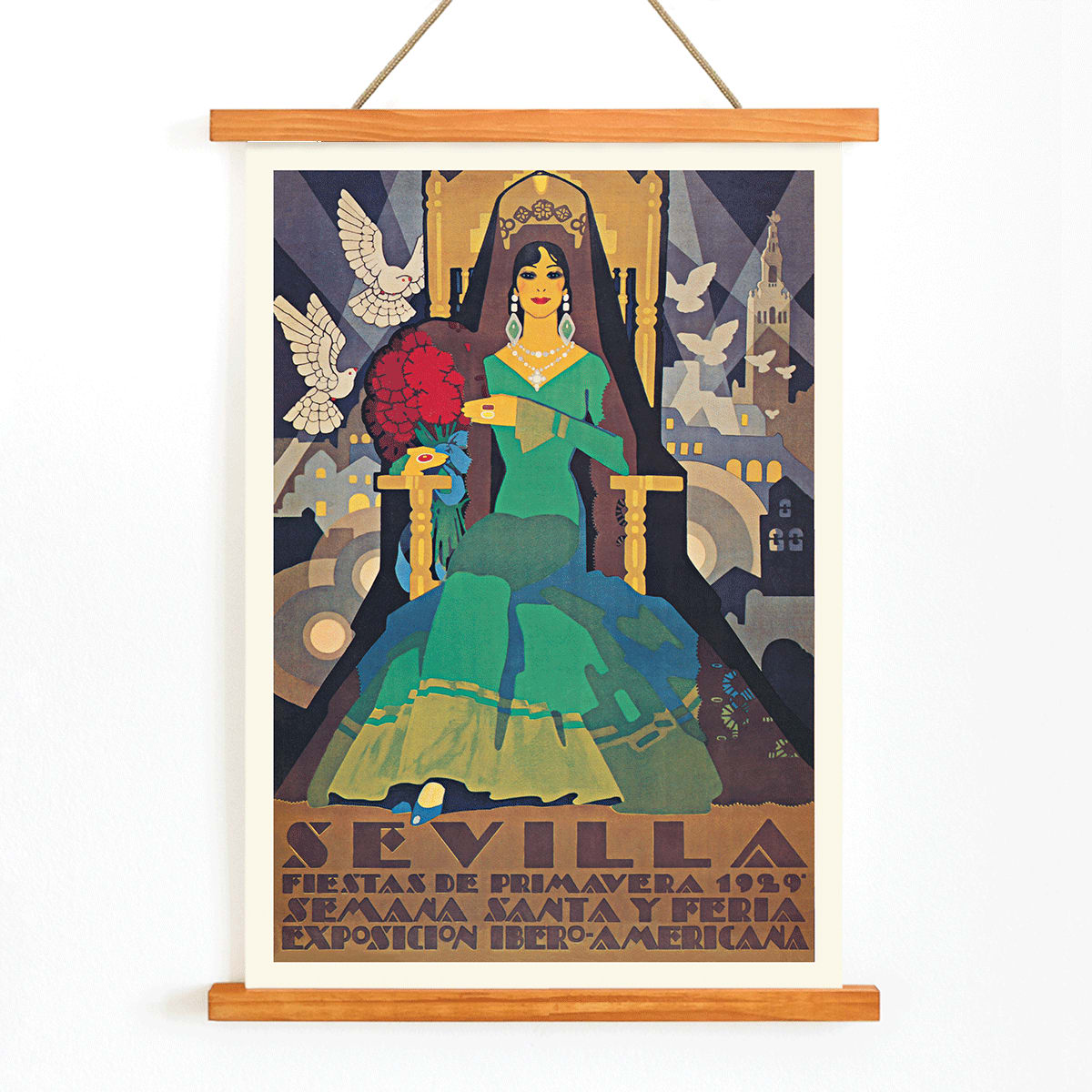
Por un artista desconocido, este póster español de 1929 nace en la época dorada de la cartelería ilustrada, cuando las fiestas de ciudad se anunciaban con gráficos modernos y llamativos. A finales de los años veinte el movimiento Art Déco se extendió por Europa, impulsando a los ilustradores comerciales a explorar formas depuradas, motivos geométricos y tipografías de gran impacto visual.
Los ilustradores anónimos solían trabajar para imprentas, diputaciones de turismo o comités de festivales, produciendo imágenes pensadas para captar la atención en espacios públicos. Hoy, estos pósters se valoran como documentos históricos y como ejemplos refinados del diseño gráfico de principios del siglo XX.
La obra
El póster fue concebido para las fiestas primaverales de Sevilla, una temporada caracterizada por celebraciones públicas vibrantes como la Semana Santa y la Feria de Abril. La imagen evoca el espíritu de estos acontecimientos mediante elementos simbólicos que comunican júbilo y bienvenida. Las palomas sugieren paz y unión, mientras que la figura serena encarna la elegancia y la tradición de la vida cultural sevillana.
Realizado en 1929, año de la Exposición Iberoamericana, el póster también proyecta a Sevilla como destino internacional, mezclando su rico patrimonio con una identidad cosmopolita y moderna. La pieza es testimonio de la ambición de la ciudad y del entusiasmo de la época por el viaje y el descubrimiento.
Estilo y características
La composición centra una figura femenina con un vestido verde fluido, dibujada con curvas estilizadas y contornos definidos. Dos palomas blancas elevándose junto a sus manos aportan un sentido de movimiento ascendente y celebración. La tipografía, clara y rotunda, está dispuesta para garantizar la máxima legibilidad, rasgo distintivo de los pósters de evento eficaces.
La paleta combina verdes profundos con tonos claros y acentos sutiles, creando una atmósfera fresca de Art Déco. El conjunto transmite una sensación festiva pero refinada, atractiva para coleccionistas interesados en publicidad vintage y en pósters verticales de fuerte impacto gráfico.
En la decoración interior
Este póster de las fiestas de Sevilla funciona como pieza llamativa en salones, recibidores o despachos, especialmente cuando se busca añadir un matiz de historia cultural. Su figura elegante y su rotulación distintiva encajan con ambientes modernos, mid-century o eclécticos, combinando bien con neutros cálidos, maderas y detalles en latón.
Para potenciar su presencia, repite los tonos verdes con plantas o textiles, o equilibra la paleta con beige y azul para un efecto sereno. También se integra a la perfección en una galería de pared de inspiración mediterránea junto a arte de viaje y otras impresiones en tonalidades verdes.