


You may also like
-
Cromolitografía de frambuesa Póster
Abraham Jacobus Wendel · 1879 · Detallada lámina botánica de frambuesa con bayas rojas maduras y hojas serradas
Póster desde €9 · Enmarcado desde €16
Precio habitual A partir de €6,00Precio habitual -
Fragaria Póster
Amanda Almira Newton · 1912 · Lámina botánica detallada de fresas con frutos maduros y tallos con hojas sobre fondo blanco
Póster desde €9 · Enmarcado desde €16
Precio habitual A partir de €6,00Precio habitual -
Citrus Limonium Póster
Charles Dessalines D' Orbigny · 1849 · Detallada lámina botánica de limón con fruto, flores y hojas brillantes en fondo crema
Póster desde €9 · Enmarcado desde €16
Precio habitual A partir de €6,00Precio habitual -
Rábanos Póster
Ernst Benary · 1876 · Lámina detallada de rábanos con raíces crujientes y hojas sobre fondo beige cálido
Póster desde €9 · Enmarcado desde €16
Precio habitual A partir de €6,00Precio habitual


-

"Very nice Posters. The quality is amazing and we received it very quickly !"
-

"A shop to visit absolutely. Huge selection of posters. We spent more than an hour there !"
-

"Perfect to find gift. Price are very good. An they can frame and pack it on site"
Sobre el artista
Abraham Jacobus Wendel fue un ilustrador botánico destacado del siglo XIX que contribuyó de forma notable a la documentación visual de las plantas en una época en la que la exactitud científica y la destreza artística se valoraban por igual. Sus láminas sirvieron como referencia para botánicos, horticultores y cultivadores de frutas, cerrando la distancia entre ciencia y arte. El legado de Wendel forma parte de un movimiento más amplio que elevó la ilustración botánica a disciplina reconocida, y sus impresiones siguen siendo objeto de deseo entre coleccionistas y aficionados al arte botánico.
Hoy sus ilustraciones siguen resonando como testimonio de la fascinación decimonónica por la naturaleza y la búsqueda del conocimiento mediante la observación detallada.
La obra
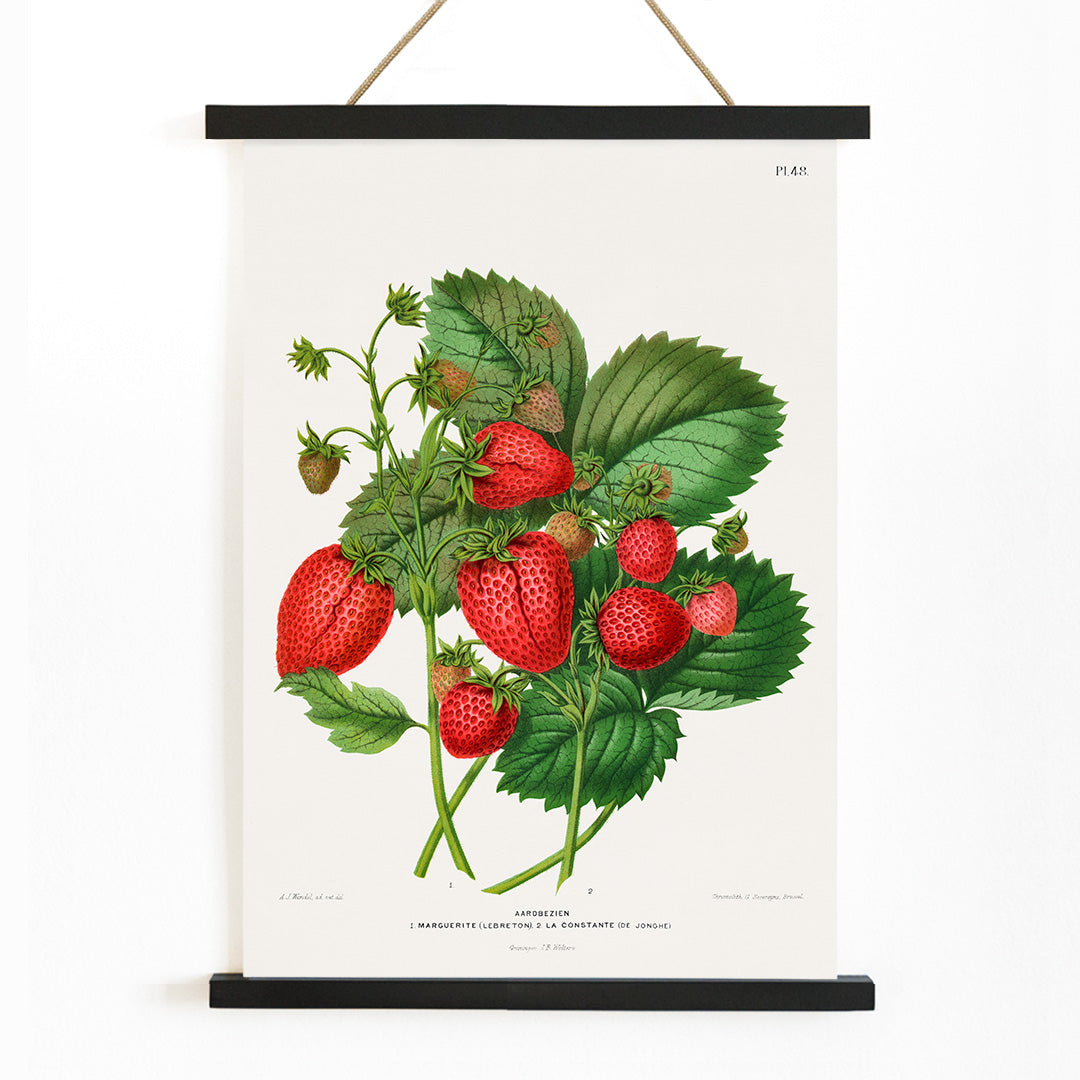
Esta plancha de fresa de 1879 se creó en un momento en que la ilustración de frutas cumplía funciones tanto educativas como prácticas, documentando la diversidad de variedades cultivadas para productores y público. Muchas de estas piezas se encargaban para publicaciones hortícolas y manuales agrícolas, reflejando una época de innovación agrícola y expansión cultural en torno a los alimentos.
La fresa representada trasciende el mero ejemplar botánico: simboliza el optimismo de la horticultura decimonónica y el afán por celebrar la abundancia de la naturaleza. La lámina se mantiene como testimonio del empeño por catalogar y valorar el mundo natural, con un equilibrio entre rigor científico y sensibilidad estética.
Estilo y características
Realizada como cromolitografía, la pieza muestra un racimo de fresas maduras acompañadas de hojas y finos tallos, ejecutadas con una escrupulosa exactitud botánica. La paleta utiliza rojos vibrantes para la fruta, verdes frescos para el follaje y suaves tonos tierra que anclan la composición.
La disposición de la imagen prioriza la claridad y el estudio: cada elemento aparece definido sobre un fondo claro, lo que realza el contraste y facilita la lectura científica del ejemplar. El resultado es a la vez vivo y refinado, convirtiendo la obra en una pieza ejemplar dentro de las láminas botánicas y perfectamente combinable con ilustraciones de ciencia.
En la decoración interior
Esta lámina vintage de fresa aporta un toque de encanto cultivado a cocinas, comedores o desayunadores, donde su motivo resulta especialmente apropiado. También funciona como acento fresco y natural en paredes de galerías o rincones de lectura, sobre todo si se combina con otras piezas botánicas o pósters de cocina.
Para un aspecto armonioso, conviene enmarcarla en madera natural o negro y combinarla con blancos suaves, verdes de follaje o sutiles toques de rojo que repitan la paleta de la obra.