


You may also like
-

La Jungle chez moi Pl.05 Póster
Turenne Chevallereau · 1938 · Póster con jirafa caprichosa entre hojas atrevidas y ritmo abstracto moderno
Póster desde €9 · Enmarcado desde €16
-

La Jungle chez moi Pl.02 Póster
Turenne Chevallereau · 1938 · Póster de animales de la jungla en formas recortadas geométricas y tonos tierra cálidos
Póster desde €9 · Enmarcado desde €16
-

La Jungle chez moi Pl.04 Póster
Turenne Chevallereau · 1938 · Póster Art Deco con animales geométricos entre follaje tropical estilizado
Póster desde €9 · Enmarcado desde €16
-

Almanaque Póster
Sebastiao Rodrigues · 1960 · Póster de león abstracto con geometría naranja y negra vibrante
Póster desde €9 · Enmarcado desde €16


-

'Pósters preciosos. La calidad es increíble y llegaron rapidísimo.'
-

'Una tienda a la que hay que ir sí o sí. Tienen una selección enorme de pósters. ¡Nos pasamos allí más de una hora!'
-

'Perfecto si buscas un regalo. Los precios están muy bien. Y te lo pueden enmarcar y envolver allí mismo'
Sobre el artista
Turenne Chevallereau fue un ilustrador francés activo a finales de los años 30, una época en la que el diseño Art Déco prosperó por toda Europa. La obra de Chevallereau refleja la fascinación contemporánea por la modernidad, utilizando formas estilizadas y composiciones atrevidas para crear imágenes a la vez decorativas y accesibles. Sus pósters tendían a situarse en el punto de encuentro entre el fine art y el diseño comercial, poniendo un lenguaje visual sofisticado al alcance de un público amplio.
Chevallereau contribuyó a una cultura visual vibrante que celebraba la innovación y la elegancia, produciendo piezas que siguen siendo emblemáticas del atractivo duradero del periodo Art Déco.
La obra
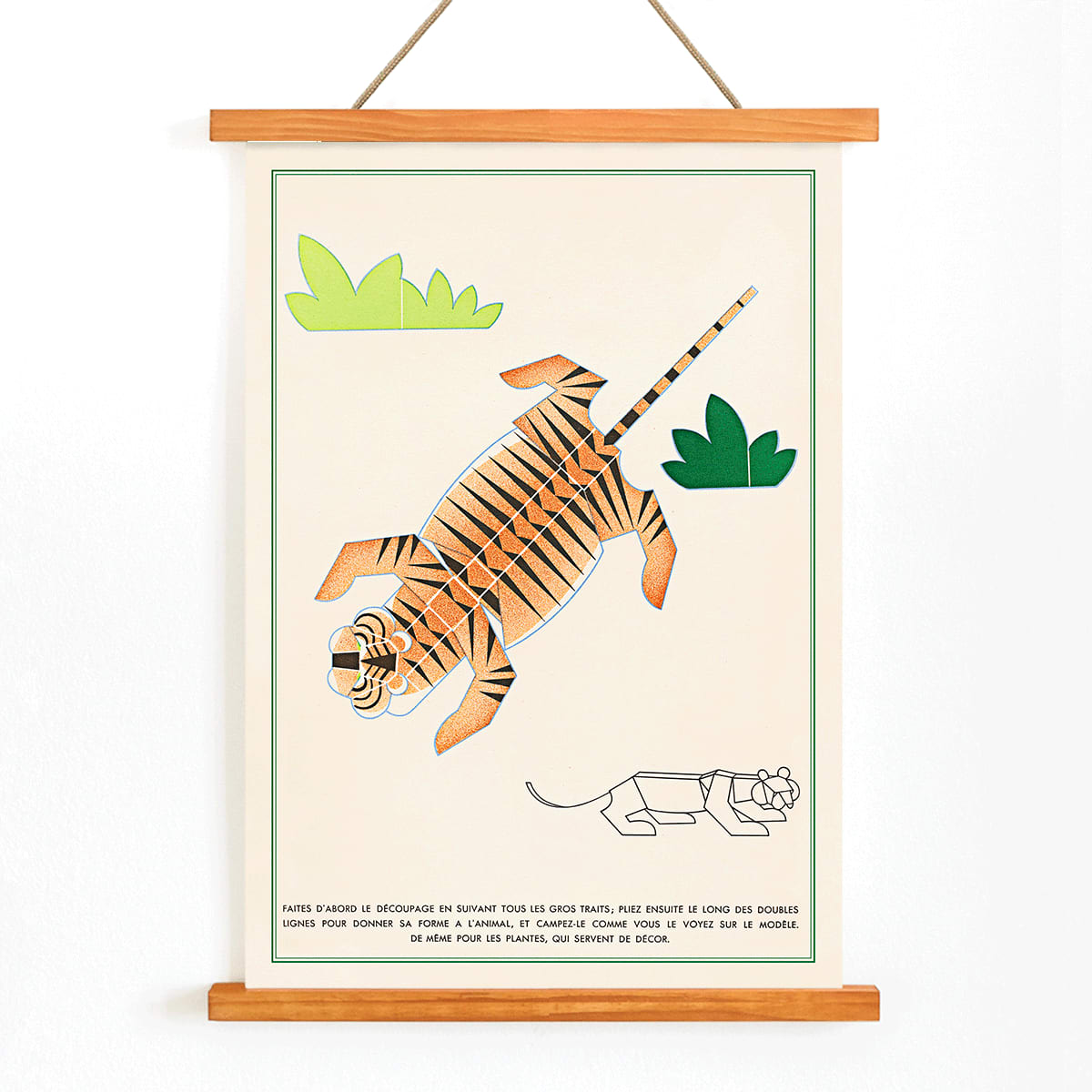
La Jungle chez moi Pl.08 fue creada en 1938, en un momento en que artistas y diseñadores europeos se sentían atraídos por motivos exóticos y la fascinación por tierras lejanas. Esta pieza recoge la tendencia contemporánea de incorporar la iconografía de animales salvajes en el entorno doméstico, simbolizando aventura y gusto cosmopolita. El título lúdico sugiere el acto imaginativo de traer la jungla indómita al ámbito doméstico, no mediante una representación literal sino a través de un diseño estilizado.
El póster ejemplifica cómo los artistas del Art Déco reinterpretaron motivos naturales, transformándolos en elementos decorativos impactantes que dinamizaban los ambientes cotidianos y respondían al deseo de evasión organizado y ordenado.
Estilo y características
El tigre aparece trazado con líneas geométricas marcadas y formas simplificadas, su silueta definida por contornos negros que aportan estructura y nitidez. El naranja intenso domina el cuerpo del animal, contrastando con el follaje verde exuberante y un fondo beige suave, conformando una paleta armónica pero dinámica. La composición es equilibrada y altamente estilizada, con la inmediatez de un póster que privilegia el impacto gráfico sobre el detalle intrincado.
El tono general es vivo y sofisticado, lo que lo hace especialmente atractivo para coleccionistas de arte mural animal y amantes de pósters en tonos naranja o verdes llamativos
En la decoración interior
Este póster Art Déco del tigre funciona como una pieza rotunda en salones, recibidores o espacios creativos, donde su presencia gráfica puede anclar el conjunto decorativo. Combina de forma excelente con acabados en maderas cálidas, detalles en latón y tejidos con textura, evocando la elegancia de los años 30 sin saturar el ambiente.
La paleta cromática se adapta tanto a ambientes neutros como a interiores más vibrantes, complementando paredes beige, marcos negros y acentos en oliva, terracota o esmeralda. Además, se integra con naturalidad en una galería de pósters vintage o arte gráfico moderno, ofreciendo un punto focal lleno de vitalidad natural.