


You may also like
-
Come verduras por tu salud Póster
Hans Schleger · 1943 · Póster modernista de nutrición con verdes intensos y tipografía contundente
Póster desde €9 · Enmarcado desde €16
Precio habitual A partir de €6,00Precio habitual -
The Vegetabull Póster
Lewitt-Him · 1933 · Póster divertido de toro vegetal con formas audaces y energía gráfica
Póster desde €9 · Enmarcado desde €16
Precio habitual A partir de €6,00Precio habitual -
Come fruta - mantente sano Póster
Work Projects Administration · 1936 · póster vintage con tipografía rotunda y frutas en un mensaje saludable
Póster desde €9 · Enmarcado desde €16
Precio habitual A partir de €6,00Precio habitual -
Plantas de huerto Póster
Claude Augé · 1908 · Lámina educativa de verduras con plantas de huerto etiquetadas en detalle botánico nítido
Póster desde €9 · Enmarcado desde €16
Precio habitual A partir de €6,00Precio habitual


-

"Very nice Posters. The quality is amazing and we received it very quickly !"
-

"A shop to visit absolutely. Huge selection of posters. We spent more than an hour there !"
-

"Perfect to find gift. Price are very good. An they can frame and pack it on site"
Sobre el artista
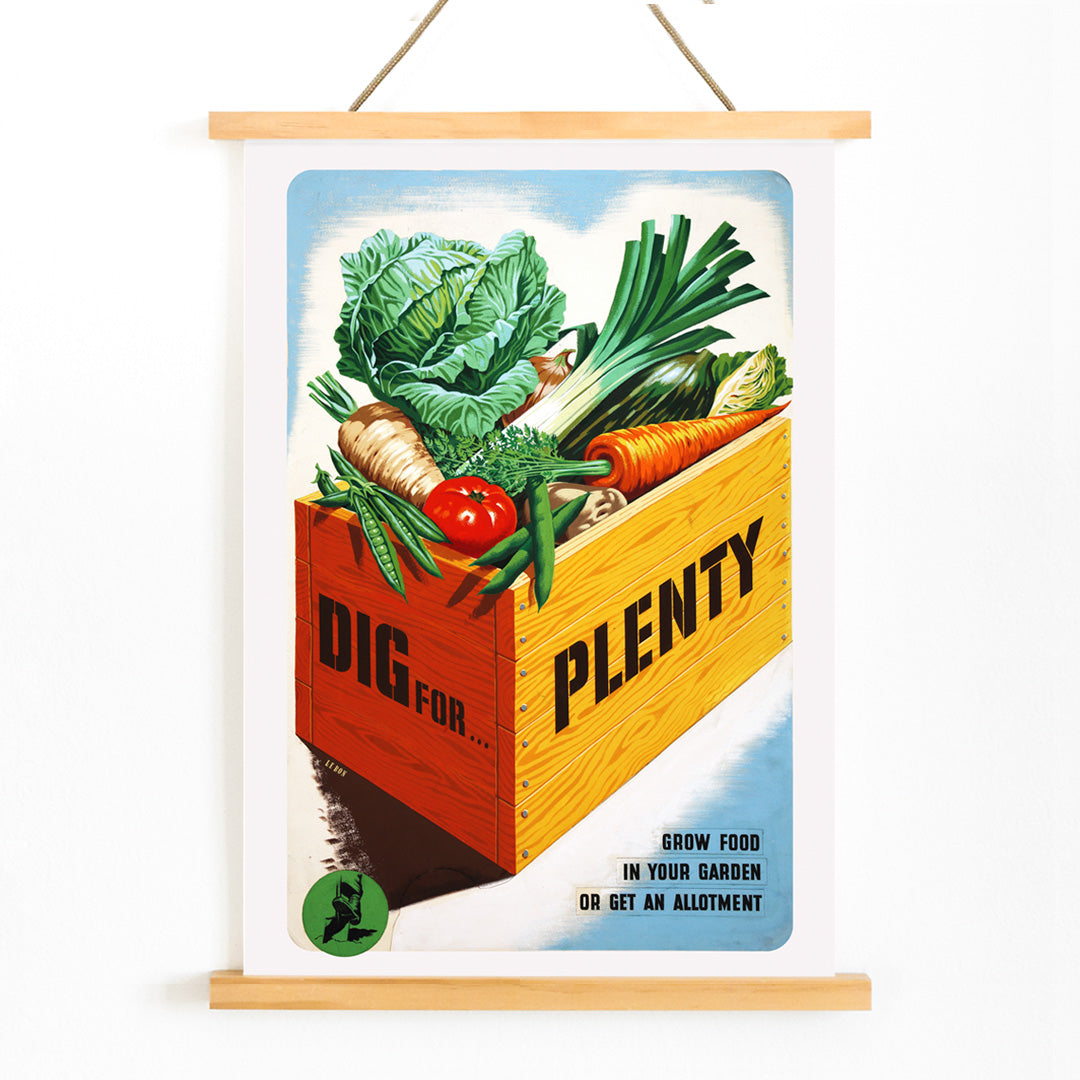
Mary Le Bon es la responsable del diseño de este póster de 1942, creado con el lenguaje visual de las campañas informativas de la Segunda Guerra Mundial. Como muchos artistas dedicados a la comunicación práctica, apostó por la claridad, el calor y la inmediatez antes que por el virtuosismo pictórico.
Su enfoque refleja la convicción de la época de que un buen diseño podía incidir en hábitos cotidianos, desde el ahorro de recursos hasta el fomento del huerto doméstico. Como póster del frente interno, Cultiva abundancia muestra cómo la ilustración y la tipografía convirtieron el deber cívico en un mensaje visual alentador.
La obra
Cultiva abundancia se produjo dentro de la iniciativa británica para promover alimentos cultivados en casa durante períodos de racionamiento y escasez. La campaña animaba a la población a sembrar sus propias hortalizas, transformando la autosuficiencia en un acto patriótico. Este póster funcionó como estímulo en espacios públicos, recordando que cada parcela sumaba al esfuerzo nacional.
Hoy en día la pieza es a la vez documento histórico y símbolo de optimismo colectivo, y resuena con quienes valoran el legado de los pósters publicitarios vintage y el ingenio que definió aquella época. También interesa a aficionados del diseño gráfico por su eficacia comunicativa y su simplicidad visual.
Estilo y características
El póster presenta una composición contundente de hortalizas — zanahorias, coles, puerros y más — sobre un fondo claro y despejado. La disposición se sostiene con una tipografía grande y legible que garantiza que el mensaje sea instantáneo. Las formas están simplificadas y son gráficas, con contornos nítidos y una calidad plana típica del diseño de la mitad del siglo XX.
Dominan verdes vibrantes, amarillos, naranjas y rojos, una paleta que evoca abundancia y energía. El tono general es alegre y comunitario, lo que convierte a esta lámina vintage en una pieza llamativa para cocinas o galerías de pared, especialmente combinada con otras impresiones botánicas.
En la decoración interior
La obra encaja especialmente bien en paredes de cocina, comedores o rincones de desayuno, donde su tema de productos caseros resulta más natural. Sus colores vivos complementan la madera natural, los azulejos blancos y los tonos verdes suaves, creando un ambiente acogedor y fresco.
Para un conjunto armónico, combínalo con otras obras temáticas sobre comida o con tipografías vintage, y valora un marco sencillo que realce su cualidad gráfica. Es una elección ideal para jardineros, cocineros y amantes del diseño de la época de guerra