


You may also like
-

Come fruta - mantente sano Póster
Work Projects Administration · 1936 · póster vintage con tipografía rotunda y frutas en un mensaje saludable
Póster desde €9 · Enmarcado desde €16
-

Come verduras por tu salud Póster
Hans Schleger · 1943 · Póster modernista de nutrición con verdes intensos y tipografía contundente
Póster desde €9 · Enmarcado desde €16
-

Cultiva abundancia Póster
Mary Le Bon · 1942 · Enérgico póster de guerra con cosecha colorida de verduras y tipografía rotunda
Póster desde €9 · Enmarcado desde €16
-

Huile Lesieur Póster
Leonetto Cappiello · 1930 · Alegre póster publicitario con cocinero vertiendo aceite dorado sobre fondo negro
Póster desde €9 · Enmarcado desde €16


-

'Pósters preciosos. La calidad es increíble y llegaron rapidísimo.'
-

'Una tienda a la que hay que ir sí o sí. Tienen una selección enorme de pósters. ¡Nos pasamos allí más de una hora!'
-

'Perfecto si buscas un regalo. Los precios están muy bien. Y te lo pueden enmarcar y envolver allí mismo'
Sobre el artista
Lewitt-Him fue la célebre sociedad creativa de Jan Le Witt y George Him, activa en Gran Bretaña desde los años 30. Su mirada innovadora contribuyó a moldear el diseño gráfico británico, combinando el modernismo europeo con una sensibilidad lúdica que hizo la comunicación visual accesible y memorable.
Se hicieron famosos por sus pósters, portadas de libros y gráficas de exposiciones, recurriendo con frecuencia al humor y a imágenes audaces para captar la atención. Su obra refleja una época en la que el arte comercial evolucionaba con rapidez y los diseñadores buscaban implicar al público mediante conceptos frescos e imaginativos.
La obra
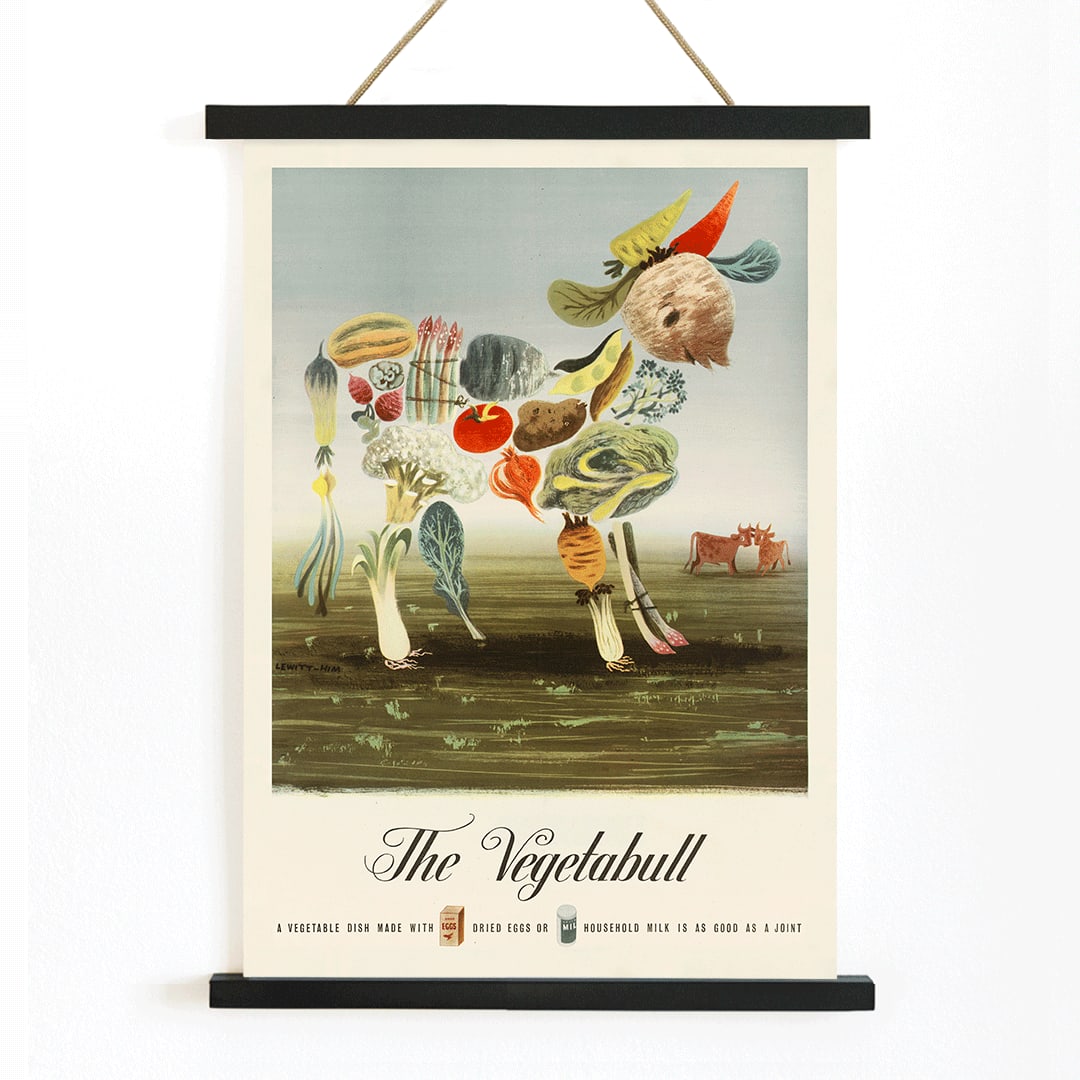
Creado en 1933, The Vegetabull nació en un momento en que la publicidad apostaba por la ingeniosidad y el ingenio visual para destacar en el paisaje urbano. Este póster recoge la fascinación de la época por la vida saludable y la abundancia, utilizando un juego de palabras visual para unir la cultura alimentaria con la vida cotidiana.
The Vegetabull va más allá de la simple imagen divertida: comenta el optimismo del período, cuando la publicidad moderna aspiraba a transformar productos corrientes en algo novedoso y atractivo. Encaja de forma natural entre otros pósters publicitarios vintage que empleaban la creatividad para reinventar mensajes comerciales.
Estilo y características
El póster muestra un toro ingeniosamente construido a partir de formas vegetales estilizadas, con cada parte del cuerpo representada por un producto distinto. El diseño apuesta por contornos marcados y simplificados y por una tipografía clara que garantiza la legibilidad a distancia.
La paleta cromática combina rojos intensos, verdes vibrantes, amarillos y marrones terrosos, con sutiles toques fríos para generar contraste. El efecto global resulta animado y divertido, lo que hace la composición llamativa y entrañable. Su motivo lúdico combina muy bien con arte mural con temática animal y atrae a quienes aprecian el diseño clásico de pósters.
En la decoración interior
Este póster aporta un toque alegre a cocinas, comedores o rincones de desayuno, donde su motivo gastronómico resulta especialmente apropiado. También puede animar estudios creativos o espacios familiares como una lámina vintage que equilibra humor y claridad gráfica.
Para un conjunto armonioso, combínalo con maderas naturales, azulejos blancos o muebles lacados en tonos salvia, terracota o mantequilla que recuperen la paleta de la obra. Acompáñalo con arte mural de cocina y marcos minimalistas para lograr un interior de aire mid-century o con influencias Bauhaus.