


You may also like
-

Arbalète I Póster
Le Corbusier · 1953 · Lámina artística modernista geométrica con formas tipo ballesta en rojo, azul y negro
Póster desde €9 · Enmarcado desde €16
-

Le Modulor Póster
Le Corbusier · 1950 · Icónico póster del hombre proporcional con línea negra y acentos rojos y azules
Póster desde €9 · Enmarcado desde €16
-

Secret Póster
Le Corbusier · 1987 · Enigmático póster abstracto con marcadas líneas negras y bloques rosa, naranja y azul
Póster desde €9 · Enmarcado desde €16
-

Maison de la Pensée française Póster
Henri Matisse · 1950 · póster de exposición con rostro de máscara y rotulación azul
Póster desde €9 · Enmarcado desde €16


-

'Pósters preciosos. La calidad es increíble y llegaron rapidísimo.'
-

'Una tienda a la que hay que ir sí o sí. Tienen una selección enorme de pósters. ¡Nos pasamos allí más de una hora!'
-

'Perfecto si buscas un regalo. Los precios están muy bien. Y te lo pueden enmarcar y envolver allí mismo'
Sobre el artista
Le Corbusier, nacido Charles-Édouard Jeanneret, fue una figura pionera del modernismo del siglo XX, conocido por sus aportaciones en arquitectura, pintura y diseño. Hacia 1920 se consolidó como uno de los defensores del Purismo, corriente que aspiraba a recuperar el orden y la claridad en la cultura visual tras las convulsiones de la Primera Guerra Mundial. Su trabajo tendía a borrar las fronteras entre disciplinas, sosteniendo la idea de una unidad entre el arte y la vida moderna.
Este enfoque multidisciplinar se aprecia en sus piezas gráficas, que enlazan los ideales del estudio con las realidades del entorno construido. Coleccionistas atraídos por las impresiones de Le Corbusier valoran cómo su visión influyó tanto en la experiencia visual como en la espacial.
La obra
Metamorfosis del violín se creó en un momento de renovación artística en Europa, cuando muchos creadores reinterpretaban temas tradicionales desde la abstracción. En lugar de representar el violín de forma literal, Le Corbusier lo utiliza como símbolo de transformación, reflejando los cambios culturales del primer tercio del siglo XX.
La pieza plantea un diálogo entre música y artes visuales: el violín funciona como metáfora del cambio y de la modernidad. Para quienes buscan arte mural inspirado en la música, este trabajo ofrece una reflexión serena sobre ritmo, armonía y el lenguaje visual emergente del modernismo.
Estilo y características
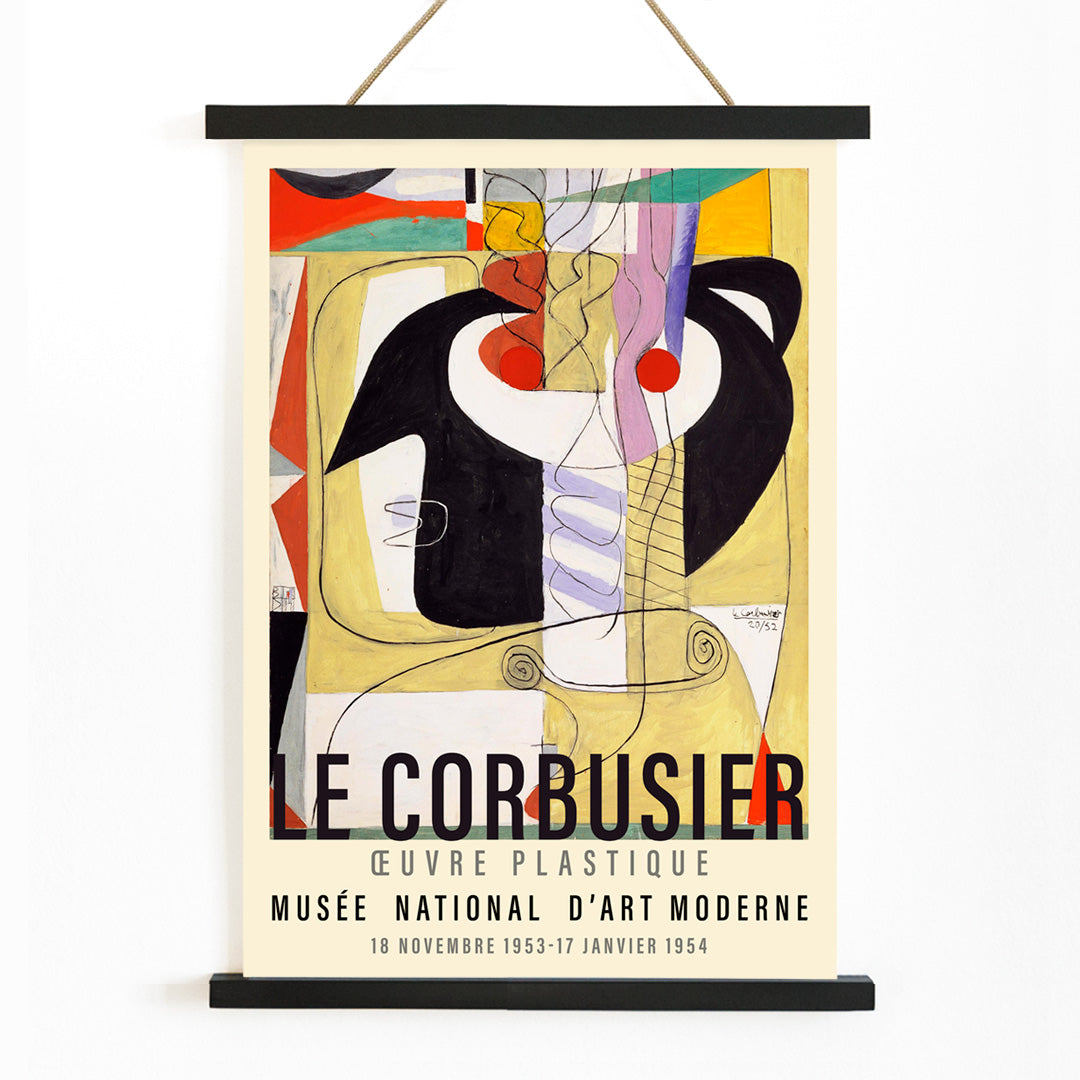
La composición se articula a partir de formas geométricas contundentes —arcos, rectángulos y planos que se intersecan— que sugieren de forma abstracta la silueta del violín. Predominan tonos primarios (rojo, amarillo y azul) equilibrados con negro y blanco, creando un juego dinámico de color y forma. Las líneas nítidas y los fuertes contrastes transmiten una sensación de movimiento y pulso musical.
Este póster modernista destaca por su claridad y precisión, y conecta bien con otras piezas abstractas y con el diseño de comienzos del siglo XX. El efecto general resulta analítico y, al mismo tiempo, enérgico, hallando un balance armonioso entre estructura y juego visual.
En la decoración interior
Este póster aporta foco y ritmo a los interiores, siendo apropiado para un salón, sala de música, despacho o pasillo. Su estética modernista combina con mobiliario minimalista, superficies de vidrio, cuero y maderas naturales.
Para una apariencia coherente, se pueden repetir sutiles acentos en rojo, amarillo o azul, manteniendo los textiles en tonalidades neutras. También funciona de forma natural con elementos de la corriente Bauhaus y con interiores de inspiración de mediados de siglo