


You may also like
-

El tren al barco Póster
Charles W. Holmes · 1925 · Dinámico póster Art Deco que une un tren veloz con un transatlántico
Póster desde €9 · Enmarcado desde €16
-

Cachalote Póster
John Karst · 1880 · Detallada lámina de cachalote con grabado lineal clásico y atmósfera costera serena
Póster desde €9 · Enmarcado desde €16
-

Arca de Noé Póster
H. C. Tunison · 1899 · Póster de estilo cuento con animales avanzando hacia un arca de madera bajo palmeras
Póster desde €9 · Enmarcado desde €16
-

Salvar a las ballenas Póster
Lawrence Vint · 1973 · póster gráfico de conservación marina con una ballena blanca estilizada sobre azul intenso
Póster desde €9 · Enmarcado desde €16


-

'Pósters preciosos. La calidad es increíble y llegaron rapidísimo.'
-

'Una tienda a la que hay que ir sí o sí. Tienen una selección enorme de pósters. ¡Nos pasamos allí más de una hora!'
-

'Perfecto si buscas un regalo. Los precios están muy bien. Y te lo pueden enmarcar y envolver allí mismo'
Sobre el artista
Por un artista desconocido, este póster de museo de 1975 encarna el espíritu colaborativo del diseño expositivo de mediados del siglo XX. En esa época muchas instituciones culturales cuidaban que el tema y el lugar primaran sobre el reconocimiento individual, permitiendo que la imagen transmitiera el mensaje con claridad.
Esta tradición de anonimato va de la mano con el propósito del póster: captar la atención con rapidez y dejar una impresión duradera. Hoy se conserva como un testimonio vívido del lenguaje visual y las técnicas narrativas del diseño gráfico estadounidense de los años setenta.
La obra
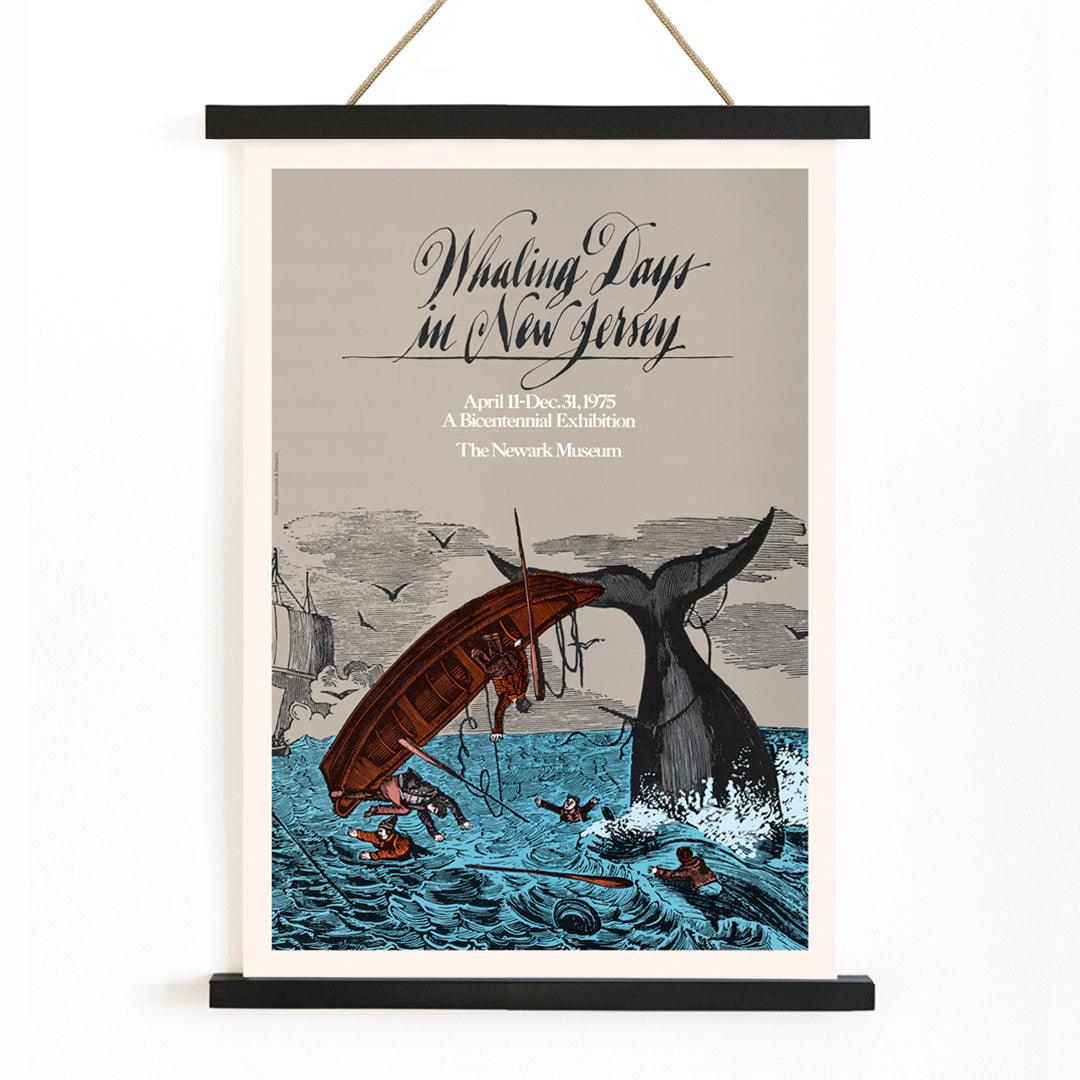
Whaling Days in New Jersey se creó para poner en valor la herencia marítima de la región en un momento en que los museos reinterpretaban las industrias locales como relatos de experiencia humana. El póster remite a la economía costera del Atlántico, donde la caza de ballenas jugó un papel central en la identidad comunitaria, los medios de vida y la relación cambiante entre el hombre y el mar.
Al transformar hechos históricos en una imagen potente, la obra invita a reflexionar sobre el riesgo, la resistencia y las actitudes cambiantes hacia la naturaleza. Es una pieza significativa para colecciones centradas en la historia marítima y en arte mural del mar y del océano
Estilo y características
La imagen muestra una pequeña embarcación ballenera enfrentando aguas turbulentas mientras una enorme cola de ballena emerge y domina la composición con gran tensión dramática. El uso de contornos marcados y formas simplificadas asegura que el motivo resulte impactante y reconocible desde la distancia, rasgo esencial en carteles expositivos efectivos.
La paleta mezcla azules profundos, grises, negros y marrones terrosos, evocando la atmósfera fría e impredecible del mar abierto. El efecto general es áspero y lleno de suspense, lo que lo hace destacar entre otras láminas en tonos azules y diseños de póster vintage que apelan al contraste gráfico.
En la decoración interior
Este póster encaja en estudios, salones, pasillos u oficinas donde se busca una nota de aventura y narrativa cultural. Complementa estilos costeros, industriales y modernos, y combina especialmente bien con materiales como madera envejecida, cuero y textiles marinos en tonos marinos.
Para un conjunto armonioso, puede exponerse junto a mapas, fotografías náuticas o objetos marítimos. Un passepartout negro o en madera oscura y marcos sobrios realzarán su silueta y conservarán una estética vintage cuidada